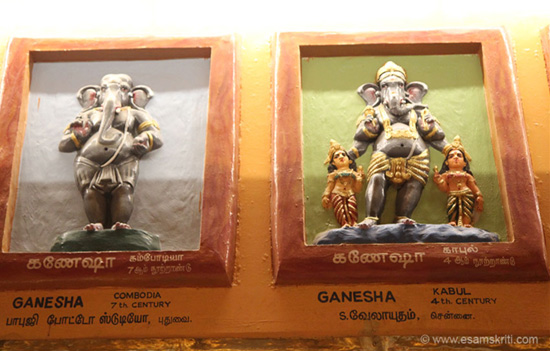
 Ganesha in Kabul and Cambodia, displayed at Ganesha Temple Pondicherry.
The worship of Lord Ganesh, also known as Ganesha or Vinayaka, is indeed ancient and has various theories of origin, as well as references in different literary sources. Ganapati, Ganesh, Gajanana and thousand names are of Lord Ganesh. They have evolved many stories around these names. Ganesh is Head, Leader of Gana. In later period, as he is son of Lord Mahadev, he is Lord of Art and Letter. It is very interesting journey of Vighnakarta to vighnaharta, i.e. Ganapati/Vinayak were malevolent deity and then it turned to benevolent deity.
Here's an overview of the theories and literary references mentioned:
Theories of Origin
Agricultural Deity
Some scholars trace the origin of Ganesh worship to agricultural societies. Many names and symbols associated with Ganesh, such as Musakavahana (rider of a rat), Shurpakarna (winnowing basket), Ekadanta (plowshare), and the rat symbolizes agriculture and fertility.
Naturalist Approach
In earlier times, there was nature worship, where natural phenomena, flora, and fauna were deified. Ganesh's mount, the rat, can be linked to earlier literary sources like Rat-Katha, Kapisthala, and Maitrayani Samhita. Rats were associated with Rudra and Ambika, representing aspects of harvest and fertility.
Various Scholarly Interpretations
Different scholars have offered various interpretations of Ganesh symbolism. Some, like R.C. Hazara, considered Ganapati/Vinayaka as demons in mountains and jungles. Others, like R.G. Bhandarkar, saw them as imps and evil spirits. D.P. Chakraborty proposed that Ganapati might have been the chief of a clan whose totem was an elephant, defeating those whose totem was a rat.
Literary Sources
Vedic Literature
References to Ganapati are found in Vedic texts. In the second Mandala, Ganapati is associated with Brahaspati, and in the 10th Mandala, with Indra.
Sutra Literature
The Manava Grihya Sutra mentions four Vinayakas and describes their obstructive activities, along with rituals to counter their destructive influences.
Epics
The Mahabharata mentions Ganeshwaras and Vinayakas, portraying them as beings prone to possess people, causing obstacles in their lives.
Manusmriti
This text advises excluding those who perform Ganayaga from the funeral feast, which may refer to the followers of Ganapati.
Yajnavalkya Smriti
This text describes one Vinayaka with six names and hints at the process by which Vinayaka was elevated into the Hindu pantheon.
PURANAS - Various Puranas contain stories related to Lord Ganesh:
Brahmavaivarta Purana
Ganapatikhanda mentions Agrapuja, Ganapati as Parabrahman, and Parameshwara.
Shiva Purana
This Purana narrates the birth of Ganapati, his beheading, and his transformation into an elephant-headed deity.
Skanda Purana
It describes different forms of Vinayaka for e.g. Trimukha Vinayaka and Panchamukh Vinayaka.
Ganesha Purana
This Purana recounts the confrontation between Ganesha and Indra during a sacrifice, reflecting the process of integration of Ganesh into the Vedic-Pauranic pantheon.
These literary sources and theories provide insight into the multifaceted origins and evolution of Lord Ganesh's worship and symbolism in Hinduism.
|
Incarnation |
Yuga |
Progeny of |
To slay the demon |
|
Mahotkata Vinayaka |
Kritayuga |
Kashyapa & Aditi |
Narantaka-Devantaka; Dhumaksha |
|
Mayureshwara |
Treta |
Shiva and Parvati |
Sindhu |
|
Gajanana |
Dwapara |
Shiva and Parvati |
Sindura |
There are various aspects of the development of the Ganapatya sect, esoteric forms of Lord Ganesh, and references to texts like the Ganesh Gita.
GANAPATYA Sect
The Ganapatya sect emerged during the post-Gupta period and is known for its Tantric form of worship.
In the Ganapati Upanishad, Lord Ganesh is extolled as the creator, preserver, and destroyer, equating him with the concept of Brahman, the supreme reality. Initially, Lord Ganesh was considered a bachelor deity, but with the rise of Shaktism, he became associated with two Goddesses, reflecting the blending of different religious traditions.
Ganesha in Kabul and Cambodia, displayed at Ganesha Temple Pondicherry.
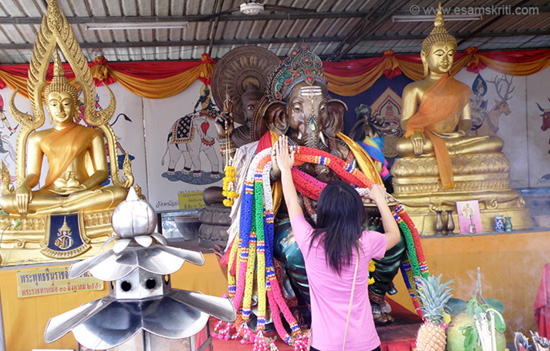 Ganesha in Thailand.
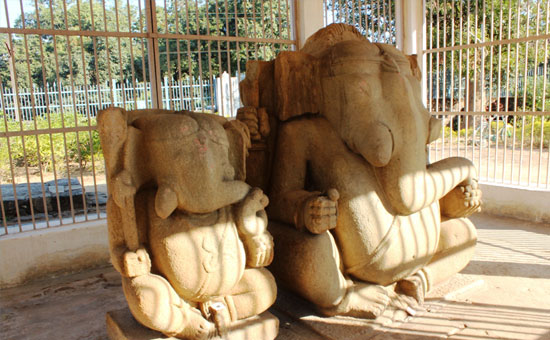 Ganesha in Barsur, Bastar Chhatisgarh.
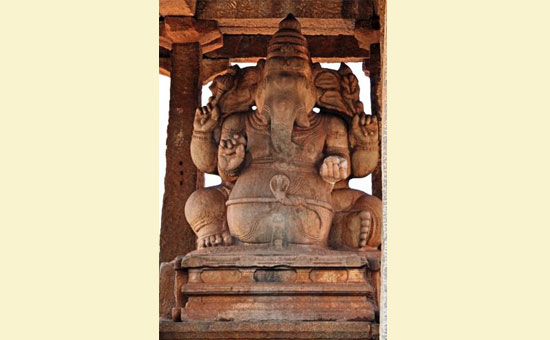 Sasivkalu Ganesha, Hampi, Karnataka.
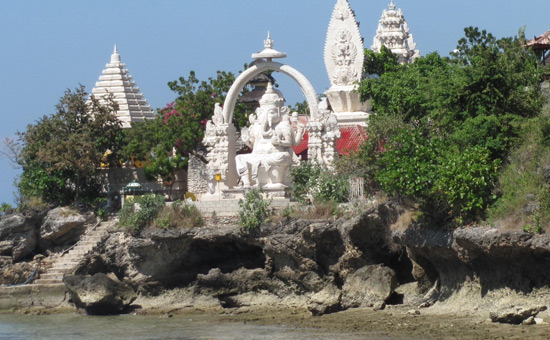 Ganesha in Indonesia.
Five Esoteric Forms of Ganapati
The Ganapatya tradition recognizes five esoteric forms of Lord Ganesh, each with unique attributes and symbolism.
1. Ucchishta Ganapati - Uchichta Ganapati is associated with Vamachara practices and is often depicted with Shakti, characterized by a red mark on the forehead and four arms.
2. Mahaganapati - Anandgiri and Mahaganapati: Anandgiri, in his work Shankardigvijaya, elaborates on the concept of Mahaganapati. Mahaganapati is described as the creator, supreme, and ultimate reality, often depicted in a red color with ten arms.
3. Urdhva Ganapati
4. Pingala Ganapati
5. Lakshmi Ganapati
Apart from these five Tantrika forms, there are other forms also for e.g. Haridra is another form of Ganapati described as the leader of all gods, typically represented in yellow with three eyes and four arms. Navanita Ganapati is known for his soft and gentle nature. Suvarna Ganapati is depicted as golden in color. Shanta Ganapati represents a peaceful form of Lord Ganesh.
Ganesha GITA
The Ganesha Gita is a significant text where Lord Ganesh, in his incarnation as Gajanana, imparts teachings to King Varenya.
This discourse likely contains philosophical and spiritual wisdom attributed to Lord Ganesh, contributing to the religious and philosophical understanding of his significance.
These aspects of the Ganapatya sect, esoteric forms of Lord Ganesh, and the Ganesha Gita demonstrate the multifaceted nature of Ganesh worship and the diverse traditions and interpretations that have arisen around this beloved deity in Hinduism.
In continuation of articles on Ganesh Chaturthi read by same author How GANAPATI is celebrated in a Maharashtrian home AND How is GAURI PUJA celebrated, that takes place during Ganapati https://www.esamskriti.com/e/Culture/Festivals/GAURI-PUJAN-takes-place-during-Ganesh-Chaturthi--1.aspx
Author Dr Moghe is Assistant Professor (Archaeology), Centre of Archaeology, Centre for Extra Mural Studies, University of Mumbai.
Also read
1. Album Ganesha Temple in Pondicherry
4. Maharashtra’s famous Ashtavinayaka Temples
5. Deeper symbolic meaning of Ganesha and message conveyed