Does God really not exist? Or was Buddha pointing at the greatest weakness of all humans?
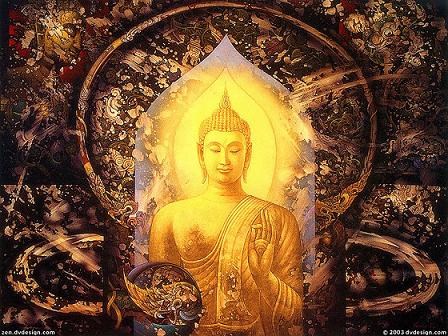
I write this knowing that I can`t bring Gautama Buddha down for a conversation to verify his intent. This is just an hypothesis based on what Buddhists call a combination of stabilizing and contemplative meditation. So if you so feel uncomfortable please..... disregard this point of view.
So when Buddha the wise the ultimate man in timeless intelligence and the supreme monk of all time declared God does not exist, or did he insist on this as Buddhists claim there is no God? I had to sit down and wonder why such a great man would say something so profound. There had to be a supreme reason.
In doing so, I think I stumbled upon the weakness dogging all religions for all time, and something Buddha the wise was trying to fix.
To begin with I will never in this lifetime give up believing, that a supreme intelligence or the purest being/thing exists, that orders the complex reality of the entire universe. Through meditation and direct dialogue, my own private self validation convinces me of its existence, since responses have been extremely precise, beyond my intelligence to comprehend at the time of receiving it, and sometimes lightening fast beyond all statistical probability.
So why would my beloved Buddha say something like God did not exist? (or did he actually say it? , whatever the argument, Budddhists believe there is no GOD, just ultimate nature and natural law and some lesser gods called DEVAS, a term borrowed from Hinduism.
To perhaps understand why Buddha would say such a thing, I think we have to understand who Buddha was, the time he walked the face of this earth and the context of his preaching.
I am now going to describe something that may get a lot of Hindus and Buddhists equally uncomfortable, for the simple reason that as I walk into read and study both camps, I see lots of myopia on both sides limited to their domains of beliefs. Which they believe to be mutually exclusive, after indulging in 2500 years of semantical arguments.
I will therefore take refuge for my arguments in the words of two stalwarts from both Buddhist and Hindu camps. Tsong-Kha-Pa the divinely inspired 14th century Buddhist philosopher in his epic book Lam-Rim-Chen-Mo, where he describes........When you divide something, you create two factions that will clash........ and J Krishnamurthy when he said, if you want to understand the universe, you have to destroy all divisions in your mind. Only then will the beauty and the breathtaking beauty of the universe reveal itself to you.
The simple message from both. See the Universe without boxes and borders. I think if you sit down and think you will realize this simple truth. The only borders are the ones that exist in your mind or are artifically created by man, it simply does not exist out there. It is that fundamental.
In my limited humble mind, and readings, classes over decades I never heard ANYTHING philosophically new in the Buddhist camp, that I had not already heard in the Hindu camp, and vice versa. So I sit here scratching my head and wondering how all these learnered people on both sides keep saying, WE are this and They are that. We know more, they know less.
So for those of you who want to continue reading, I hope to illustrate to you with simple facts and common sense why I consider the so called Hindu~Buddhist divide complete silly semantics. Show perhaps how gramatical heroes have driven a perceptual divide based on terminology. Also, why some segments with political agendas have done the same. Both such creatures exist on both sides of the divide.
So who was Buddha? Was he really creating a new religion? Or, trying to salvage the faith into which he was born?
Strangely I see the most comprehensive answer from the Hindu camp. Simply because Hinduism predated Buddha`s birth on earth by untold centuries, ran into a midlife crisis and was waiting for a miracle to pull them out of their crisis. Thus, they have a more sustainable and well documented version for the reasons of Buddhas birth as they saw it.
Buddhists of course, are well versed in Buddhas life and what happened after he was born. It is simple logic, why would a Buddhist concern himself too much with anything before Buddha? He is a Buddhist, He learns about Buddha and all variations of Buddhist thought after Buddha. What happened before Buddha is to him the same as asking most people, what was there before the Big Bang in which your universe was created? He has no idea, and even more, why would it interest him? He is still grappling and trying to gain control of his universe, much less what happened before his universe existed.
Therein lies the reason for a lot of social Buddhist Myopia. In all my interactions with Buddhists, I see a greater tendency with Buddhists who keep repeating they are different from Hindus. I see them desperately searching (mostly futile) for fundamental differences between Buddhism and Hinduism, without realizing that the load bearing pillars of Buddhism; Karma, Rebirth, Looking inward not outside, Meditation, Pranayama, Tantra, Mandalas, Mantras, Sutras, Compassion, Acceptance etc have been adopted from Hinduism.
Hindus however seem to be more inclined and extremely happy to walk into a Buddhist monastry and pray the same way as they would in any Hindu temple without too much mental flexing to see if he/she was bowing to a different God.
A lot of claimed fundamental differences in belief, I seem to be discovering after much pondering is nothing but simple differences in terminology and nomenclature.
To me its like living in a room within a house and coming to the conclusion, my life and my room is independent of the house.
I am about to narrate a very very simplified version of the core events. However much someone wants to complicate the story, the core facts can never alter the essense of the argument.
I could claim non-bias in this story being born into a Brahmin family, and am trying to practise Buddhism, which I see as no different from what I was taught and heard from my toddler years. Its just that Buddhism to me has a better and granular, well documented SOP (Standard Operating Procedural document on how to stick to the right path while in samsara, and more structured texts, with no difference in the fundamental belief system I was brought up with).
It has a step by step, do it yourself manual like quality for dummies like me.
Everything works for me in Buddhism, except this GOD bit that was niggling. I completely trust that Buddha the Wise had to have a reason. I just had to discover why he said what he said.