- A sister’s love for her brother is expressed by telling about why thread (MUNJA) ceremony, explaining three parts of ceremony, why does the thread have nine fine threads, father-son chat, initiation into Gayatri Mantra, ceremony for girls who did take to education and what is the thread ceremony called across different states.
Having witnessed my brother’s Munja ceremony in May 2022, I felt a deep urge to document this incredible ritual. Our Sanatana Dharma is far more than a set of beliefs; it is a lifestyle beautifully aligned with spiritual psychology and natural laws. Exploring the hidden layers behind this custom revealed just how deeply our traditions connect the human mind with the rhythms of nature.
It has been a fascinating journey of discovery, and I am excited to share it in my own small way.
Why Munja Ceremony?
“Upanayanam, also known as the “Yajnopavita Sanskar”, is one of the “Ṣoḍaśa Saṁskāras” -16 sacred rites in Hindu dharma that marks a soul’s journey from birth to death. Each samskara purifies the individual and strengthens their path toward dharma, spiritual wisdom, and moksha.”
शुभं भवतु विप्रस्य विद्याऽआरम्भस्समुत्तमः।
यज्ञोपवीतधारणेन स्यात् सन्मार्गेऽस्य नित्यदा॥
Śubhaṁ bhavatu viprasya vidyā'rambhaḥ samuttamaḥ।
Yajñopavīta-dhāraṇena syāt sanmārge'sya nityadā॥
Meaning:
“May this initiation of the young Brahmin into learning be auspicious and noble. By wearing the sacred thread (yajñopavīta), may he ever walk the path of righteousness.”
Upa means near and nayana means leading to. Upanayana is derived from the root √nī meaning 'to lead'. Upanayanam means "leading near to," emphasizing the journey of going near knowledge that leads to wisdom. This alludes to the fact that the shishya (student) sits
near his guru (teacher), absorbing the knowledge imparted by the latter.
A
shishya undergoes this ceremony to qualify to attend a gurukul. Generally, boys
between the ages of 8 and 14 are eligible for the ceremony.
Let me briefly take you through my brother’s Munja ceremony, followed by some
fascinating facts I discovered about this important Hindu samskara and from around
the world too!
January 2022 marked the beginning of this auspicious occasion in our household. My brother turned eight and we decided to initiate his Upanayanam ceremony. The thread ceremony is known as “MUNJA” in Maharashtra.
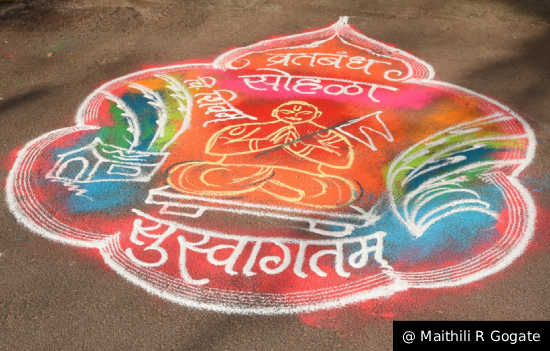
The Munja ceremony takes place in three parts
Rituals before the ceremony, the main Munja ritual, and the boy’s preparation for the gurukul. Like important Hindu ceremonies, it begins by praying to Bhagwan Ganesha, the one who removes obstacles.
The
Muhurtam (the auspicious date and time of the Munja) is usually set according to the boy’s horoscope chart, looking for favourable alignments of the Sun and Jupiter to bless the child.
A
special fire rite called Grahamakh is performed to purify the space and seek
divine blessings. As part of this, a ritual called Nandishraddha is performed to honor and receive blessings of our
ancestors. Food (prasadam) is prepared at home, offered to God, and then shared
with family members.
An
interesting and enjoyable part of Munja is when family members invite the child
and his parents for KELVAN. This is a
special feast hosted exclusively for the boy, featuring all of his favourite
food items.
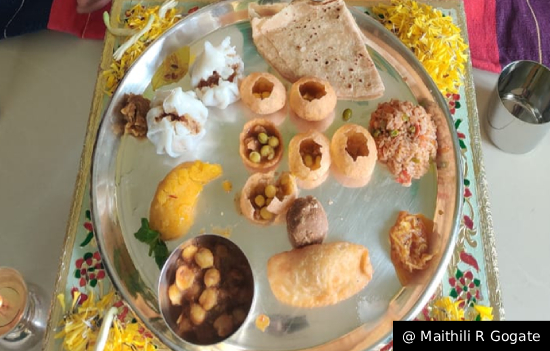
Preliminary Rituals
Matrubhojanam is the first core
ritual of this phase. It is a deeply emotional moment where the mother feeds
her son from her own hand for the last time before he symbolically departs for
the gurukul. This acts as a beautiful transition from childhood dependency to
self-reliance.
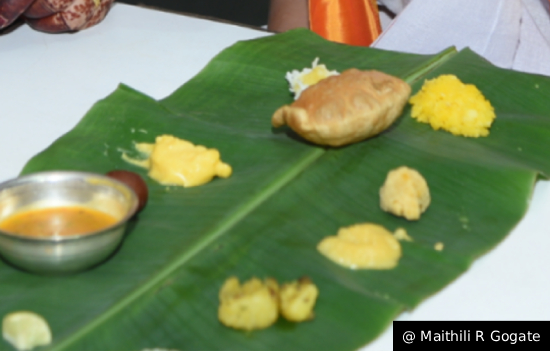
Following
the Matrubhojanam, the Mundan (shaving of the head) takes place. This act holds
profound psychological value, symbolising the shedding of ego and the
repudiation of material pleasures, preparing the mind for pure learning.
Next,
the boy is bathed and dressed in traditional attire, most often a pristine
white dhoti. A Mekhala—a sacred girdle woven from a bundle of Munj grass—is tied around his waist. This acts as a physical metaphor for self-restraint and the tightening of one's discipline.
Next
comes the vital ritual of Yajnopavita
Dharana. Along with the mekhala, the boy dons the sacred thread, known as
the Janva in Marathi and Yajnopavita
or Janeu in Sanskrit. It is draped carefully over his left shoulder, crossing
diagonally across the torso.
The
Janva is rich with complex micro-symbolism.
Why does Janva have nine fine threads?
Each
single thread representing a cosmic energy or deity:
Om
(The primordial sound),
Agni
(The sacred fire),
Naga
(The serpent/divine shield),
Soma
(The lunar nectar),
Pitr
(The ancestral spirits),
Prajapati
(The creator),
Vayu
(The wind element),
Yama
(The lord of righteousness and cosmic order),
Vishwadeva
(The universal divine collective).
These
energies are further synthesized to invoke the blessings of the three
primordial Hindu female deities who govern human growth: Goddess Saraswati
(Knowledge), Goddess Lakshmi (Prosperity), and Goddess Parvati/Durga (Inner
strength and protection).
What is the deeper Symbolism of the Three Main Strands?
While
these nine individual threads represent distinct cosmic energies, they are
bound together into three primary, distinct strands. My curiosity led me to
research why the number three holds such an absolute, sacred status in this
ritual.
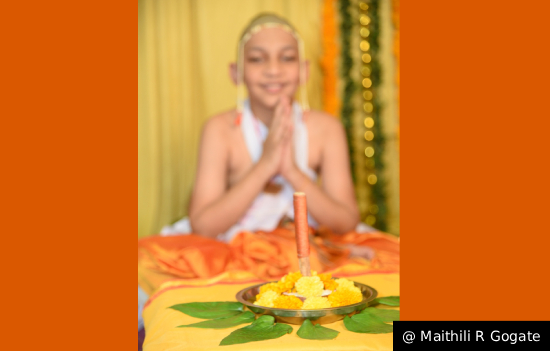
Beyond
its connection to the three primordial Goddesses, I discovered that these three
strands serve as a constant physical reminder of the Tririnas—the three fundamental metaphysical debts that every human being carries from birth:
Deva Rina: Our debt to the
divine forces of nature and the cosmos. We repay this by leading an
eco-conscious, righteous life and practicing daily gratitude.
Rishi Rina: Our debt to the
sages, gurus, and ancient teachers who preserved and passed down timeless
knowledge. We repay this debt by continuously learning and freely sharing
wisdom with others.
Pitri Rina: Our debt to our
ancestors and parents who gave us physical life and nurtured us. We honour this
by respecting our family structure and actively keeping our rich cultural
heritage alive.
By
wearing this thread directly over his heart, the young student is reminded on
his cosmic duties on every single day. Its aim is that as he grows older,
accumulates wealth, and gains intellectual knowledge, he remains fundamentally
grounded in humility, responsibility, and service to the world around him.
The Main Ritual: Brahmopadesha
The
absolute pinnacle of the entire ceremony is the Brahmopadesha, which directly succeeds the Yajnopavita Dharana.
The Brahmopadesha is a deeply intimate, highly sacred rite shared primarily between the father and the son under the close guidance of a Guruji who chants potent Vedic mantras. During this ritual, the father assumes the role of the child's very first spiritual teacher. He whispers vital life instructions, moral codes, and ancient wisdom directly into the child’s ear—offering him a foundational blueprint on how to navigate the world with unwavering discipline, deep humility, and a clear sense of purpose.
The Gayatri Mantra and the Concept of Dvija
The profound emotional and spiritual peak of this communication is the child's formal initiation into the Gayatri Mantra. Tucked safely under a sacred, traditional silk cloth known as the Kashi Vastra, my brother sat tightly between my father and Guruji, chanting this powerful mantra for the very first time in his life.
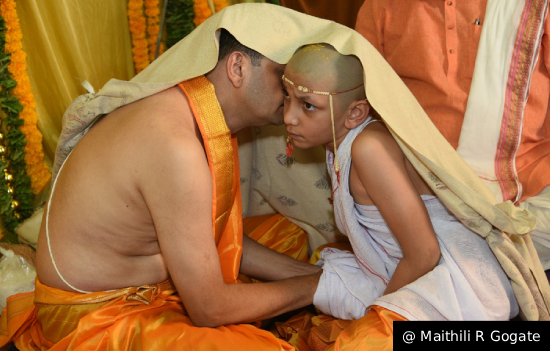
This specific, quiet moment is what gives the entire Upanayanam its deepest philosophical meaning. In Sanatana Dharma, this specific initiation marks an individual's definitive second birth, transforming the young child into a Dvija—a Sanskrit term that literally translates to "twice-born."
Our
first birth is entirely physical, given to us biologically by our parents. Our
second birth, however, is purely spiritual and intellectual. It takes place the
exact moment we are awakened to higher knowledge, strict self-discipline, and
cosmic awareness through the regular practice of the Gayatri Mantra. The mantra
itself is an earnest prayer addressed directly to Savitr, the solar deity,
asking to illuminate, refine, and sharpen our internal intellect. By receiving
this mantra, the child officially transitions from a carefree, playful
individual into a conscious seeker of absolute truth, gaining the formal
spiritual authority required to study the sacred Vedas.
Having attained this spiritual authority, the young boy gains the traditional right to offer divine blessings to others. In a beautiful role reversal, the boy’s immediate family members and elders then proceed to touch the feet of the newly initiated Brahmachari.
Following
this, the boy holds out a cloth and utters the historic, traditional phrase:
Bhavati bhikshām
dehi,
(Mother, please grant me alms)
With
these words, he seeks his very first symbolic alms from his mother and the
other elderly women present, learning the vital lessons of humility and
complete dependence on the community.
The Preparation for Gurukul
The entire ceremony concludes with an elaborate, joyous procession known as the Bhikshawal, which symbolises the boy's actual journey toward the gurukul.
Traditionally,
the Mama (maternal uncle) holds the responsibility of physically handing over
the boy to his new guru. This represents the moment the parents officially
transfer the profound responsibility of nurturing, educating, and protecting
the child over to his teacher.
Breaking the Myth of Gender Bias
It
is a common contemporary misunderstanding that the Munja ceremony is reserved
exclusively for young boys. Historically, while it may not have always gone by
the exact same regional names, a parallel form of this sacred initiation was
actively conducted for girls.
Who is a Brahmavadinī?
In
ancient times, girls who chose the path of lifelong education and spiritual
practice were formally known as Brahmavadinīs. They wore the sacred thread over
their left shoulders just like the boys did. Primary ancient texts, including
the Aśvālayana Gṛhya Sūtra, the Yama Smriti, and the Harita Dharmasūtras,
explicitly present a clear set of mandatory rituals to be performed so that
young girls could systematically undertake Vedic studies.
Conversely,
who chose not to attend a formal, residential gurukula were referred to as Sadyovadhu, which translates as “one who marries immediately.”
However,
even the Sadyovadhu underwent a distinct form of the Upanayana initiation as an
integrated part of their pre-wedding rituals. During her wedding ceremony, the
bride would intentionally don her upper garment (such as her wedding saree)
over her left shoulder in a very specific manner to signify this rite of
passage. This crucial aspect of the Upanayana finds clear, definitive mention
in several ancient texts, most notably the Gobhila Gṛhya Sūtra (2.1.19) as well
as various other Dharmasūtras.
Thread Ceremony across India
Detailed
mentions of this foundational ceremony are found through our ancient literature
namely across the Gṛhyasūtras, Dharmasūtras, Dharmaśāstras, and the
foundational Saṃhitās.
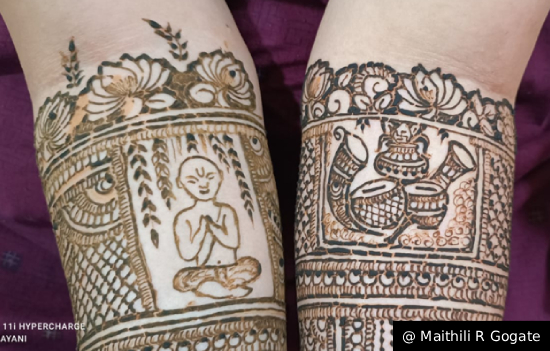
What is the name of Thread Ceremony across States of India?
While
Upanayanam is the original Sanskrit term, this beautiful rite of passage adapts
colorfully across different languages and states in India, proving that while
our linguistics vary, our core values remain beautifully identical:
Upanayanam:
Malayalam
Munja:
Marathi
Poite:
Bengali
Upanayana:
Kannada
Mekhal:
Kashmiri
Janya:
Sindhi
Brataghara:
Odia
Logun
Dioni: Assamese
Upnen
/ Upvit: Rajasthani
Jānoi:
Gujarati
Upanayanamu:
Telugu
Pūṇūl:
Tamil
Thread Ceremony in Nepal and amongst Paris
Intriguingly,
the essence of this spiritual awakening crosses international borders. In
neighbouring Nepal, a nearly identical ceremony called Bratabandha is held. It comprises the essential rituals of Choodakarma
(shaving of the head) and the formal donning of the sacred thread, known
locally as the Janai. An individual who bears this thread is reverently called
a Tagadhari.
Even
outside the boundaries of Indic faiths, a striking parallel exists in the
ancient Zoroastrian ceremony known as Navjote. During this initiation, children
are invested with a sacred undershirt called the Sedreh and a ritual vestment
cord known as the Kushti belt.
Much like the Janva, this sacred clothing symbolizes the conscious shifting into personal and spiritual responsibility. Under the watchful eyes of their parents—who vow to provide continuous moral and religious education—the children commit to daily disciplines of hygiene, righteous living, and prayer. Mirroring Vedic customs, the Navjote is conducted in the sacred presence of a consecrated fire, known as Atar.
Conclusion
Ultimately,
whether called Upanayana, Munja, Poite, or Navjote etc, this timeless ritual
reminds us that true education begins when we look beyond material desires and
awaken our inner intellect.
By passing down these sacred threads of wisdom from one
generation to the next, we ensure that the light of dharma continues to
illuminate our path forward into the modern world.
Author Maithili is Bsc – Psychology, 1st Year (DES, Pune)
To read all articles
on Ceremonies
Also read
1.
Thread
Ceremony for Gujarati family
2.
Thread
ceremony by Jnana Prabhodini
3.
Naming
ceremony by Jnana Prabhodini
4. Awakening to the Gayatri Mantra