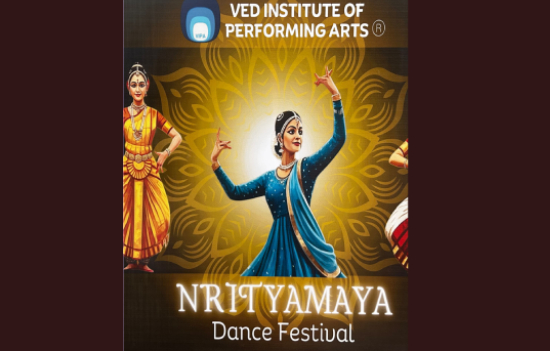
- Know about the dance
form and artists who performed at the 2025 Nrityamaya Dance
Festival, Mumbai.
The Nrityamaya Dance Festival stands as a vibrant celebration of India’s classical dance traditions — a confluence of rhythm, expression, devotion, and cultural continuity. True to its name Nrityamaya, meaning “woven with dance,” the festival captures the philosophy that movement becomes meditation and expression becomes prayer.
It brings together diverse classical forms such as Kathak, Odissi, Bharatanatyam and Kuchipudi on a single stage, offering a rare convergence of styles, traditions, and artistic visions.
With its deeper purpose rooted in preserving heritage and nurturing the
next generation of performers, Nrityamaya continues to serve as a powerful
platform for gurus and disciples thereby showcasing the timeless spirit of
Indian dance.
At the heart of this celebration stands the Ved Institute of Performing
Arts (VIPA), founded by Guru Aditi Yadav in 2009. Based in Mumbai, VIPA has
grown into a beacon of classical excellence, known for its disciplined yet
creative approach to Kathak. With over a thousand students across ages, the
institute emphasizes both nritta
(pure dance) and nritya (expressive storytelling). Affiliated with leading dance universities and home to the Ved Dance Company, Guru Aditi Yadav’s institution continues to shape committed dancers who embody both grace and rigor. Through festivals like Nrityamaya, she fosters an environment where the sacred bond between guru and shishya thrives.
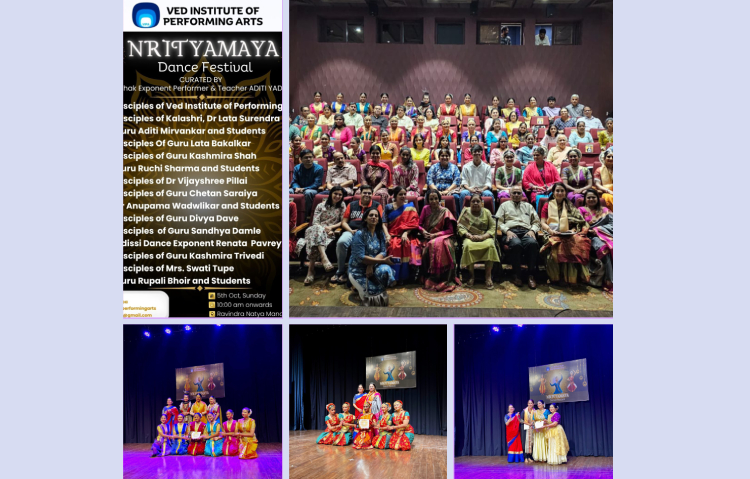
The Nrityamaya 2025 edition, held on the fifth of October at the Ravindra Natyamandir Mini Auditorium, opened with a captivating invocation by Guru Aditi Yadav’s disciples, who performed Vakratunda
Mahakaya. This devotional Pushpanjali to Lord Ganesha created an atmosphere
of reverence, rhythm, and spiritual grounding. Their synchronized expressions,
sharp bols, and precise footwork reflected the hallmark training of VIPA, setting
a beautifully auspicious tone for the evening.
Following this, the disciples of Guru Lata
Surendra presented a soulful Bharatanatyam composition that celebrated the deep-rooted guru–shishya parampara.
Their performance was marked by angular precision, sculptural postures,
expressive abhinaya, and rhythmic clarity — all hallmarks of the Bharatanatyam tradition. The group exemplified the timeless elegance and spiritual depth for which Guru Lata Surendra is widely respected in the classical dance community.
The audience was then transported into the sculptural world of Odissi by Guru Aditi Mirhankar, whose presentation showcased
the lyrical beauty of the form. With fluid torso movements, expressive eyes,
and temple-inspired poses, she evoked stories steeped in devotion and
mythology. Her mastery lay in her ability to merge grace with narrative,
offering the audience a glimpse into the divine architecture of Odissi dance.
A contrasting burst of energy entered the auditorium with Guru Lata Bakalkar’s presentation of Badaat Mridang. Her choreography emphasized rhythmic complexity, bold footwork, and dynamic tempo variations. The dancers’ command over intricate patterns displayed both strength and precision, leaving the audience enthralled by the sheer power of the piece.
The stage then welcomed Guru Kashmira Shah
and her disciples, who performed Pushpanjali
followed by Taal Shloka. Their work
reflected a harmonious blend of devotion and technical mastery. The Pushpanjali
radiated purity and surrender, while the rhythmic intricacies of Taal Shloka
demonstrated their disciplined training and deep understanding of tala.
The festival then moved into the realm of Kuchipudi with Guru Vijayshree Pillai and her disciples, who performed
Om Namah Shivaya. Their presentation
was a mesmerizing interplay of rhythmic precision, expressive storytelling, and
divine intensity. The characteristic fluidity of Kuchipudi, combined with their
synchrony and expressive vigor, created an aura of spiritual upliftment.
An energetic contrast followed with Guru Chetan Seraiya’s vibrant choreography Thunga Thunga. The piece showcased complex rhythmic patterns, quick
footwork, and spirited movements that filled the auditorium with infectious
energy. His choreography stood out for its boldness, innovation, and pulsating
tempo.
Joyful dynamism continued through Guru Anupama Wadawalikar’s presentation of Dhan
Tan Alla. Her choreography merged intricate rhythm with expressive flair, creating an atmosphere brimming with enthusiasm and celebration. The dancers’ commitment and joyful expressions added a refreshing liveliness to the evening’s flow.
This was followed by Guru Divya Dave’s
devotional offering, Bhagyada Lakshmi
Baramma. Her piece radiated serenity and grace, invoking Goddess Lakshmi
through composed movements and spiritual expression. The performance
beautifully balanced poise and devotion, leaving the audience touched by its
purity.
The stage then witnessed the depth of classical storytelling through Guru Sandhya Damle and her disciples, who
performed Shrivigraha Roopam” and Sachchidananda Ahobalah. Both pieces showcased profound compositional refinement, expressive devotion, and traditional aesthetics. The performers’ involvement and emotional clarity left a lasting impact on the audience.
A meditative stillness settled over the auditorium as Guru Renata Parvej
presented OM. Her choreography
explored the sacred syllable through minimalistic movements, controlled gestures,
and expressive subtlety. The performance invited the audience into a space of
silence, reflection, and inner tranquility.
Balancing divine duality, Guru Swati Tupe performed Ardhangani, a graceful depiction of Shiva and Shakti. Through
delicate gestures, expressive contrasts, and rhythmic interplay, she
highlighted the harmony between the masculine and feminine energies. Her
performance stood out for its depth, symbolism, and refined classical
vocabulary.
The evening concluded with a grand finale by Guru Rupali Bhoir and her
disciples, who presented Gal Bhujang.
A powerful blend of classical intricacy and vibrant energy, the piece showcased
synchrony, dynamic choreography, and commanding stage presence. Their
concluding performance electrified the auditorium, earning thunderous applause.
This performance brought Nrityamaya 2025 to a close. The year’s performances were truly memorable.
In every performance, Nrityamaya 2025 illuminated the profound dedication, discipline, and devotion that define Indian classical dance. Guided by Guru Aditi Yadav and supported by the artistic community brought together by the Ved Institute of Performing Arts, the festival reaffirmed that India’s classical traditions continue to thrive — graceful, powerful, and eternally divine.
Ved Institute of
Performing Arts is extremely grateful to the Gurus and their students for
gracing and performing at the festival. Our humble Pranams to All.
To see VIDEO of program 4.37 minutes
Written by senior student Anushree Devarashetty, Madhyama Pratham
Student, Ved Institute of Performing Arts.
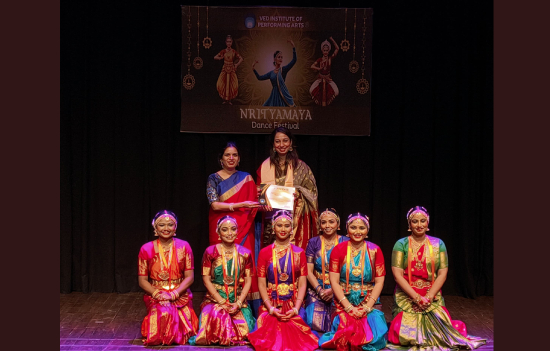
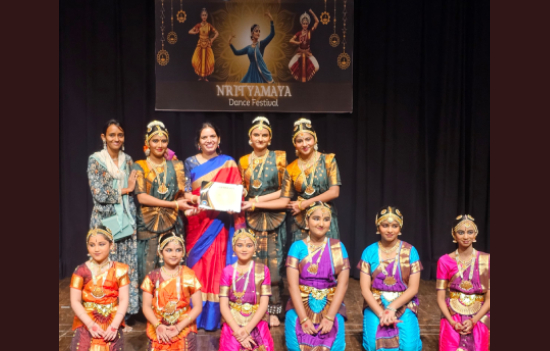
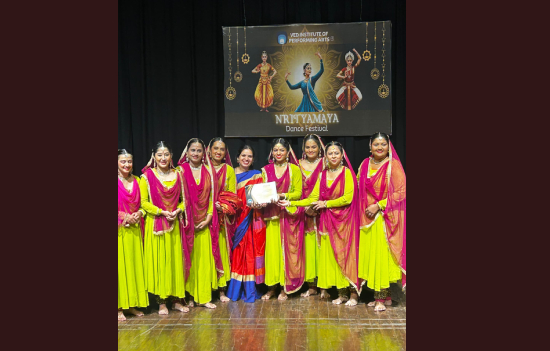
We now present some
pictures.
To read all
articles by Ved Institute of Performing Arts
To read all articles on Indian Dance Forms