- Simple and practical ideas how Yoga helps deal with
uncertainty. When the inner ground is steady, the
outer storms lose the power to shake us. Yoga brings
adaptability, awareness, and resilience.
Finding steadiness through Yoga when the world feels unsteady.
We
live in times where uncertainty is constant -changing expectations, emotional
overwhelm, health concerns, shifting roles, and an always-on digital world. In
such moments, the mind looks for control and reassurance. Often, what we truly
need is not more information, but more grounding.
This
is where yoga becomes more than just a physical practice to being our anchor. Yoga
cannot eliminate the uncertainty, but it can deepen our awareness, bring in the
right mindset and strengthen our capacity to move through uncertain times.
Why does Uncertainty
bother us?
When
the future feels unclear, the nervous system shifts into a survival or
protection mode. As thoughts accelerate, the breath becomes shallow, the muscles
tighten, and body functions like digestion, assimilation and sleep get disturbed.
Yoga works with the body and breath to shift our awareness from survival to grounding and stability. It teaches us to regulate ourselves and be more aware of the “now” to tide through a challenge.
How can Yoga help
dealing with uncertainty?
1. What is impact of uncertainty on the nervous system?
When
life feels uncertain, the nervous system goes into a survival mode, also
referred to as the Sympathetic nervous system which manages fight or flight. We
react quickly, think excessively, and struggle to rest. Through breath,
movement, and awareness, we can shift from reactivity to grounding and response
(also known as the parasympathetic nervous system managing rest, recover and
restore).
Yoga teaches us to stabilize
ourselves. A steady breath creates a steady
mind and a steady mind makes wiser decisions.
2. The Power of
the Breath
In
yogic wisdom, breath is not just oxygen -it is prana, life force. The
way we breathe directly influences how we feel.
a. Shallow,
rapid breath fuels anxiety.
b. Slow, deep
& conscious breathing,
signals safety to the body.
When
uncertainty rises, return to the breath. It is available 24 by 7, always there
and grounding. Simple practices can restore emotional equilibrium within
minutes.
a. Lengthening the exhalation.
b. Left-nostril breathing for calming (Chandra
Bhedana brings Emotional Balance).
c. Gentle Anulom Vilom or alternate nostril breathing pranayama
helps with clarity and balance.
3. Use Sukshm Yog and gentle
stretches to your advantage
Uncertain
times often create inertia, physically and emotionally. We feel stuck, heavy,
or unmotivated.
Gentle, mindful movements, especially sukshma yoga* (subtle joint movements like neck rotations, shoulder rolls, wrist and ankle rotations, gentle spinal twists, slow cat–cow movement etc.) and slow alignment-based asanas awaken circulation, release stored tension, and rebuild confidence. Mindful movement reminds us that energy can shift. Nothing is permanently stuck.
Five grounding asanas for stability-Focus on
slow, steady holds with breath awareness:
a. Tadasana (Mountain Pose) - builds internal steadiness
b. Vrikshasana (Tree Pose) - cultivates balance amid movement
c. Balasana (Child’s Pose) - restores emotional safety
d. Setu Bandhasana (Bridge Pose) -opens the heart gently.
4. How to find Inner stillness
amid outer noise through meditative practices?
Meditation during uncertain times is not about silence, it is about space - between stimulus and response. Don’t stop the thoughts forcefully but try and expand the space between them. In uncertain times, meditation can helps us to:
a.
Observe fear (try and be a spectator) without being consumed by it
b. Separate facts from imagination
c.
Cultivate thoughtlessness, even for a few moments
d.
Sit comfortably with eyes closed and observe your
natural breath. Each time
the mind wanders, gently return to the breath. Practice 15-20 minutes daily
minimum. The moments of stillness can
recharge us at a deeper level. Over time, they strengthen emotional resilience.
In addition to simple breath meditation,
other types of meditation that can help-
a. Practice Mauna (silence) for min 30 minutes a day.
Let the thoughts come and go but do not become attached to them.
b. Listen to bhajans
or chants that bring tranquility
c. Repeat a mantra
(So-Hum) (Om) or any of your choice
d. Music meditation is a great way to relax our
nervous system
e. Practice Tratak (Candle Gazing) for mental stillness and meditation - Sit comfortably and gaze softly at a candle flame. Avoid blinking as long as comfortable. Close eyes and observe the after-image. This practice strengthens your “thoughtlessness field.
f. Grounding body scan meditation - Lie down in shavasana. Bring awareness from toes
to head. Notice the sensations without judging them. Soften each area that is holding
tension.
g.
Practice
daily affirmations
I anchor myself in this breath.
I trust that clarity unfolds step-by-step.
I release the need to control everything in
my life.
My breath is my safe space.
I am grounded in this moment of doubt.
I allow life to flow through me with ease.
I trust my inner wisdom to guide me through
this moment.
5. Yoga as Emotional
Maturity
Authentic
yoga is not about flexibility, it is about adaptability to your environment.
When
practiced consistently, yoga nurtures benefits of emotional regulation, patience,
acceptance, self-awareness and grounding.
We
begin to understand that uncertainty as a part of life and not a deviation from
it.
Instead
of asking, “Why is this happening to me? We shift to, “What can I learn and how can I stabilize my mind and body through this chaos and make more stable life choices?”
6. Bringing Yoga off the Mat
A
real transformation happens when your practice leaves the mat. Some tips-
a.
Pause before responding to a conflict
b. Take one conscious breath before making a decision
c.
Soften the jaw and shoulders during stress
d. Return to breath awareness in overwhelming moments.
These
micro-moments and adjustments of awareness build macro-resilience.
Summary of how Yoga can help deal with uncertainty
Uncertainty is part of life. It is not your
enemy. Resistance to it is. Uncertain times do not demand perfection. They
invite presence.
Yoga
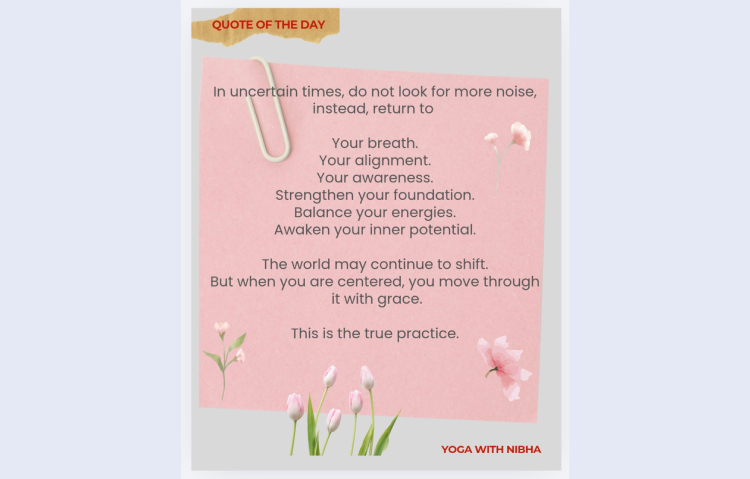
cannot remove the external unpredictability, but it can strengthen your foundation.
When the inner ground is steady, the outer storms lose the power to shake us.
Yoga brings adaptability, awareness, and
resilience. When the breath is steady the body
grounded, and awareness clear, uncertainty becomes manageable.
Return
to your breath.
Return
to your body.
Return
to your center.
Return
to stability.
That
is Yoga.
Yogacharya
Nibha - From two decades of being in high-stressed corporate jobs, to a Yoga teacher & practitioner who loves to unlearn, learn, and teach. She teaches Yoga and is based in National Capital Region.
To read all articles by author
To read all articles
on Meditation AND on Asanayas and
Pranayan
Also
read
1. How
the Bhagavad Gita helps manage Uncertainty
2. What
is Pranayam, types and benefits
3.
Yoga
is the way to mind management
4.
Yoga
techniques to manage anxiety and project confidence