- Sanjanaa in conversation with historian,
epigraphist Dr. Chithra Madhavan on how
she got interested into history, intent to change perception of history
education, learnings from Leiden Copper Plates w.r.t trade relations between
India and S.E. Asia and Revenue grant of
Anaimangalam village near Nagapattinam for upkeep of a Buddhist Vihara. Cholas, followers of Shiva, were patrons of
Buddhism. Lastly, what study of Indian history taught her?
Return
of The Lediden Copper
Plates by Netherlands in 2026 was in the news.
History is often remembered through magnificent temples, towering gopurams and celebrated rulers. Yet, some of the most enduring records of India's past are found not in monuments alone, but in inscriptions engraved on stone and copper. These inscriptions are invaluable because they preserve the voices of those who lived centuries ago, offering authentic insights into political events, administration, society, religion and culture. They are among the most reliable primary sources available to historians.
Few
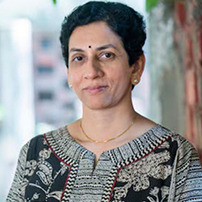
scholars have contributed as extensively to this field as Dr. Chithra Madhavan,
noted historian, epigraphist and author, whose work on South Indian temple
architecture, iconography and Sanskrit inscriptions has inspired students and
researchers alike. During my conversation with her, we explored one of the most
fascinating records of the Chola period, the Larger Leiden Copper Plate Grant.
However,
our discussion extended far beyond a single inscription. It also covered a reflection on history, scholarship, India's maritime legacy and the timeless lessons the past continues to offer. Dr. Madhavan’s thoughts are in italics.
A Journey Shaped by Curiosity
For Dr. Madhavan, history was never simply another academic subject. “I had an inherent interest in History from a young age and I also had a few good teachers in this subject in school. Together, these made me make up my mind that I should study this subject in college.”
While her teachers encouraged her interest, one childhood experience transformed it into a lifelong passion. “It was a
holiday with my parents to various parts of South India which made me an
admirer of temple architecture and sculpture. When I was 13, we visited the
famous Hoysala temples in Belur and Halebid and
the Ranganatha Svami
Temple in Srirangam. I was absolutely fascinated by these temples.”
That fascination eventually developed into decades of research, writing and teaching, making her one of India's foremost scholars of South Indian history and epigraphy.
Bringing History Alive
When asked what continues to motivate her after years of scholarship, Dr. Madhavan's answer reflects her commitment to making history meaningful for younger generations.
“Indian History is a wonderful subject and very interesting too. It is sad that because of the drab way in which syllabi had been set over many decades, students have lost interest in this subject. Many teachers made it ultra-boring too.”
Her mission therefore has been to change the way history is
perceived.
“I would like to showcase Indian History to be a wonderful subject. Even if it is not taken as a profession by youngsters, it is ok, but they must be proud of the wonderful heritage and culture and traditions they have inherited.”
Her
words remind us that history is about
understanding the civilisation we have inherited and recognising the achievements of those who came before us and not merely about remembering dates or dynasties.
Passion above All
Historical research demands patience, perseverance and years of dedicated study. When I asked Dr. Madhavan what sustains that commitment, her answer was immediate. “Just a one word answer: Passion!”
She is equally practical when advising young students interested in history and epigraphy. “It is a fascinating subject, no doubt, but the career opportunities are few and far between in India. If one is willing to and can overcome all odds, it would be ok to take up this as a profession. If not, it would perhaps be better to pursue another profession, and take this up as a serious hobby.”
She points out that several independent scholars have made remarkable contributions to the discipline. “There are people who have done this and excelled in it. They have been accepted as being equal to professional historians and archaeologists.”
It
is an encouraging reminder that genuine scholarship is driven by passion and
commitment and not merely by profession.
Why Inscriptions Continue to Matter
In an age dominated by digital information, inscriptions remain indispensable to historians. Dr. Madhavan explains, “Inscriptions, stone and copper plates, provide a lot of information about political, social, economic and cultural history. They are vital as authentic sources of the past.”
Unlike many later historical narratives, inscriptions are contemporary records. “They have not been tampered with, most times. We can rely on the information provided therein. Where there is hyperbole, it is easy enough to find out. It is also important to compare the information here with other sources whenever possible."
Her explanation highlights why epigraphy remains one of the
strongest foundations of historical research. Every
inscription provides evidence that helps historians reconstruct the past with
greater accuracy.
The Leiden Copper
Plates
Among
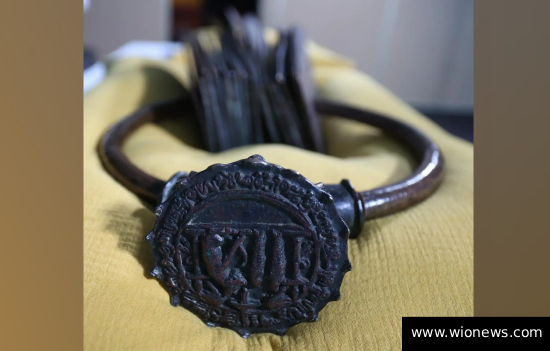
the many inscriptions Dr. Madhavan has studied, the Larger Leiden Copper Plate Grant occupies a special place. “The Larger Leiden copper plate grant is a bi
lingual record of the eleventh century and belongs to the Chola era at its
height. Like most other copper plate records of Tamil Nadu, this too is bi
lingual, the first part or Prasasti being in
Samskritam and the second or operative part being in Tamil.”
The inscription records an important royal grant. “This inscription records the gift of a fertile village named Anaimangalam to a Buddhist Vihara in Nagapattinam by Rajaraja Chola I.” (maker of Brihadesvara Temple, Thanjavur)
The historical context makes this grant even more significant. “Nagapattinam was a busy port and the sailors and traders from the South East Asian countries used to come there. The Sailendra king Maravijayottungavarman of the Sri Vijaya Empire of Indonesia and Malaysia built a Vihara there named Chudamani Vihara for his people who came to Nagapattinam. It was to this Vihara that Rajaraja Chola I donated this village of Anaimangalam as a goodwill gesture.”
This
single inscription opens an extraordinary window into the interconnected world
of the eleventh century. It reflects flourishing
maritime trade between the Chola Empire and the Srivijaya kingdom, while
also demonstrating religious accommodation and diplomatic goodwill.
Dr. Madhavan first encountered the Leiden Plates during her doctoral research. “My PhD thesis was 'Sanskrit Inscriptions of Tamil Nadu' and I studied these plates as they were from the Chola times and the first part is in chaste Samskritam. It was fascinating!”
Rajaraja Chola and a Maritime Empire
The Leiden Copper Plates reveal far more than a land grant. “Basically, the Prasasti portion of these plates are about the Chola Kings' lineage and their achievements, just like the other copper plate inscriptions of this dynasty.”
Yet one aspect distinguishes these plates. “What makes it particularly interesting is that it refers to the construction of a Buddhist Vihara in Nagapattinam by Maravijayottunga Varman of the Sailendra Dynasty of Srivijaya during the rule of Rajaraja Chola I (985–1014 CE).”
The inscription reveals the close relationship between two great maritime powers. “These two major powers, one in India and the other in Indonesia Malaysia, must have had strong trade contacts. Since Nagapattinam was an important seaport and since the Srivijaya traders used to come there, there was need for a place of prayer for these people who were Buddhists. Maravijayottunga Varman's gesture of building a Buddha Vihara and Rajaraja's generous response by way of donating a village to this institution are praise worthy.”
For
Dr. Madhavan, Rajaraja's greatness lay in governance more than conquest. “Rajaraja's administrative acumen is showcased in his various inscriptions, both stone and copper plates. He was a farsighted ruler and his administrative acumen shows through in the way he continued the traditions set by his ancestors and also the changes he brought about.”
Genealogy and Royal Tradition
The Sanskrit verses of the Leiden Copper Plates also preserve the traditional genealogy of the Cholas. “The Cholas belonged to Surya Vamsha. Among the names of the traditional ancestors of the Chola dynasty, Manu is mentioned as the son of Surya (Ahimakara in this copper plate inscription).”
She further explains, “The Samskrit portion of these plates begin with a verse in praise of Vishnu, then go on to mention other ancestors of the Solar family to which the Chola belonged. Verses three and four mention Manu and his son Ikshvaku, followed by Mandhata and Muchukunda etc.”
Importantly, these references are not limited to the Leiden Plates. “Most of the information about the Chola genealogy can be seen in other copper plate inscriptions of this dynasty too.”
Together,
these inscriptions provide valuable evidence for understanding how medieval
rulers represented their ancestry and royal legitimacy.
A Lesson beyond History
As
our conversation came to a close I asked Dr. Madhavan what decades of studying India's history had taught her. Her answer
became a lesson for life itself.
“The one timeless lesson I have learnt is that people must learn to let go of ego. I may sound an idealist, but when we see that even great emperors like Rajaraja I and Rajendra I have gone to dust, and their most enduring legacy are the monuments to Gods that they have constructed... who are we to have such huge opinions about ourselves?”
It
is perhaps the most fitting conclusion to a discussion on the Leiden Copper
Plates.
More than a thousand years after they were inscribed, these copper plates continue to remind us that history is a record of ideas, values, diplomacy, faith and cultural exchange. Through the work of scholars like Dr. Chithra Madhavan, these voices from India's past continue to inspire the present, encouraging us to study our heritage not only with curiosity but also with humility and pride.
To read all
articles by author
To read
all articles on Indian Influence Abroad
Also read
1.
How
the Chola Copper Plates reached Leiden University, Netherlands
2.
Did
you know of Karaikkal Ammaiyar, a Tamilian Saint who is part of Temples in
Cambodia
3.
Ramayana
of South and South-east Asia