- This
article gives the broad contours of a proposed agreement between India and
Nepal by which India funds and executes the rebuilding of Nepal whilst Nepal
strengthens the Siliguri Corridor. Intent is to make it a win-win for both countries.
Last
night I was listening to a program on News18 and earlier heard a podcast on Gunner’s Shot , the very
popular channel run by Lt Gen P R Shankar (retd). The topic was Siliguri
Corridor and the steps India was taking to secure the corridor i.e. only 22 kms
in width.
While
the plans seemed good, I have an idea. Why not buy or
perpetual lease, say 50 kms from Nepal and increase the corridor size.
Nepal needs the money for reconstruction efforts post the 2026 floods and India
a larger corridor.
Background
Maj
Gen Shokin Chauhan (retd) wrote, “The Siliguri Corridor, often referred to as India’s “Chicken’s Neck”, is approximately sixty kilometres in length and barely twenty to twenty-two kilometres wide at its narrowest point. To its northwest lies Nepal. Bhutan forms its northern flank. Bangladesh borders it to the south, while further north rises the formidable Himalayan barrier leading into Tibet under Chinese control.” 3
Notwithstanding current upsurge in relations,
the China shall want the border issue with India resolved on its terms so India
has to look ahead.
Bollywood and Nepal
Late actor, Dev Anand, did a lot to promote Nepal through his movies for e.g. the 1970’s super hit ‘Hare Ram Hare Krishna’. Nepali stars in Bollywood include Manisha Koirala, singer
Udit Narayan Jha, and actor Sunil Thapa. It started with veteran actress Mala
Sinha. In the 1970s there was a nice singer Sushma Shrestha, who sadly never
hit big time. Father of popular TV actress Bharti Singh, is of Nepalese origin.
Well-known painter Laxman Shrestha was born in Nepal and studied at Mumbai’s J J School of Arts. 4
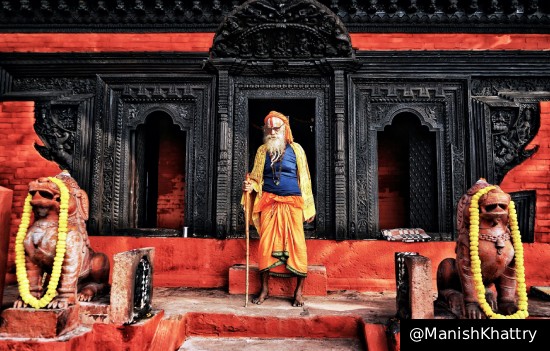 Nepal Temple, Lalita Ghat, Varanasi.
At
the outset say that I love Nepal.
Here
are the broad contours of a proposed arrangement. No offence meant to my Nepali
brothers and sisters. Think coolly!
1. Depending on the
size of land purchased (irrevocable transfer) India can compensate Nepal as an
outright grant or fund its reconstruction efforts. If Nepal wants a lease, say
500 years, the terms would be different. This contour focuses on purchase.
2.
The land so purchased would become a part of India. The people residing have two
options-become citizens of India or continue to be Nepali citizens.
3. The area
purchased would be a Centrally Administered Union Territory.
4.
Atleast 75% of the area purchased would be in the possession of the Indian Army
and Centrally Administered Forces like BSF and CRPF.
5. The purchase
consideration, if in the form of a grant could be say Rs 5,000 crs. If in the
form of reconstruction (say B), it would be 20% more say Rs 6,000 crs.
6.
If reconstruction, contracts for the same would go only to Indian companies
like say L&T, HCC and government of India owned subsidiaries. The focus would
be on re-building infrastructure, connectivity, hydropower plants & homes.
7. Indian companies
can get their projects funded only by the State Bank of India through nominated
branches say SBI Main branches at Delhi or Mumbai.
8.
Each project would have clear objectives, delivery schedules. Payment to India
companies would be in Indian Rupees on meeting project goals and sign off by the
Nepal government.
9. SBI could get
these projects re-funded by EXIM Bank.
10.
SBI would provide loans at a concessional interest rate of say 6%. Interest
subvention cost would be borne by the Central government. This should reduce
cost of project.
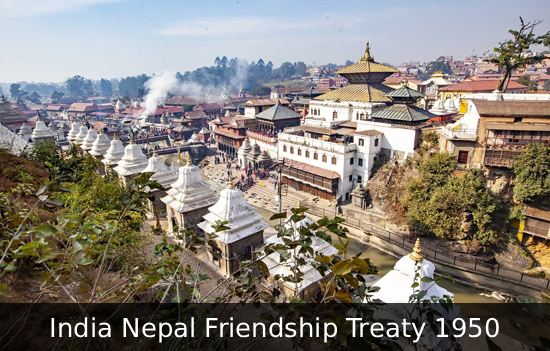 Pashupatinath Temple, Kathmandu is divine. I was lucky to visit.
11. All products and
services provided to Indian companies for Reconstruction of Nepal would,
provided the delivery is in Nepal, be treated as Exports and be eligible for
appropriate benefits.
12.
Nepal would impose no restrictions on the usage of land once it is legally
transferred to the Government of India.
13. If Nepal choses
the grant and not purchase option, the grant would be payable in two parts, one
on signing of the agreement and two on handing over of land including
demarcation of international border.
14.
If during this process (purchase option), India reconstructs any power plants
she will give Nepal the option of selling the power to India. This would be
over and above what Nepal has contracted to buy from Nepal.
15. On signing the agreement, the Government of India shall initiate a one year ‘Visit Nepal’ advertising campaign across India (budget Rs 25 crs) to promote tourism to Nepal.
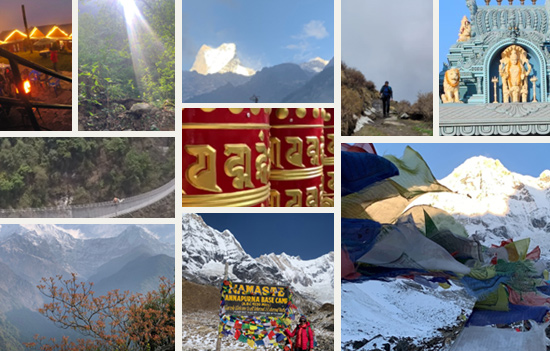 Annapurna Base Camp Trek, Nepal is very popular.
Why is Siliguri
Corridor important?
Shekhar
Gupta wrote in ThePrint, “But, for India it’s a very vital link to fellow Indians in eight states. That is all the seven states in the original definition of northeast and Sikkim. And then, of course, to Dooars, which is the easternmost part of West Bengal and Darjeeling as well.”
Close by is the Teen Bigha corridor which India leased to
Bangladesh so that it had easy access
to the conclave of Dahagram-Angarpota. 2
Who might oppose?
People in Nepal – loss of sovereignty. They must be practical. Nepal need reconstruction but lacks in resources. Do they want to be selfish and not help fellow Nepalis rebuild their lives?
People in India – The opposition could come from those who wish to use the Siliguri Corridor to effect demographic changes and weaken India’s connect with the Northeast. Supporters of countries, within and outside India, that want a week India could call it ‘Indian Hegemony’. They might want India to be secular-buy land from Muslim majority Bangladesh. Some could petition the Courts.
China,
Bangladesh and the U.S. for their own reasons. Opposition would not be direct
but behind the scenes. Bangladesh would lose the leverage it currently believes
it has.
If
the India and Nepal Agreement is transparent
and has an FAQ ready before being made public it would help. The FAQ should be
in Nepali, Hindi and English languages.
After years, Nepal has a political party that has a clear legislative majority. This is the time for tough decisions for mutual benefit. After all the India Nepal Friendship Treaty 1950 is unique. India and Nepal’s people to people relations are very strong.
Also read and
References
1.
Making Siliguri a
Fortress – News 18
2.
Why is Siliguri
Corridor important for India
3.
Defending the
Siliguri Corridor
by Maj Gen Shokin Chauhan (retd)
4.
Explained – The India Nepal Friendship Treaty 1950
5.
Pashupatinath
Temple, Kathmandu, Nepal
6.
Trekking
Tales from Annapurna Base Camp