- Concept of Scheduled Tribes is a colonial creation. The ones in the northeast are different from those in other parts of India. It is time for the central government to revisit the definition and Income-tax benefits. Article gives details of ST Kings across India.
In
2014, I visited Tripura and saw the very imposing Ujjayanta Palace in Agartala. It was the residence of the former rulers
and is now a Museum.
At the palace
entrance I saw a bust of Dr Ambedkar. I asked security why, reconfirmed by
locals too. He said that the rulers belong to Scheduled Tribe (ST) so Dr
Ambedkar bust.
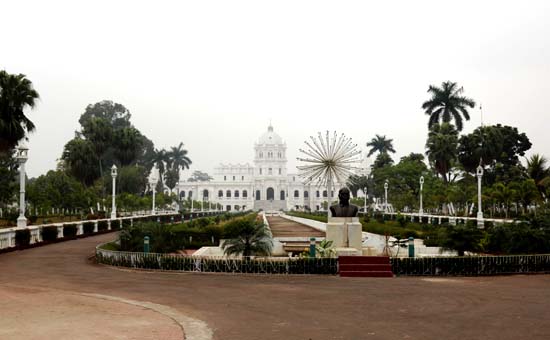 Bust of Ambedkar at entrance of Ujjayanta Palace. 2014.
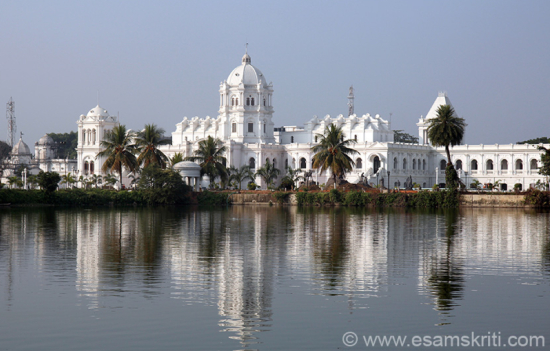 Ujjayanta Palace.
“The titular Maharaja is Pradyot
Bikram Manikya Deb Barma, who is also a prominent political figure leading
the TIPRA Motha party.” Search result.
As I drove around Agartala saw a function in honour of the ace music director late R D Burman. There I got to know that Burman Da was part of the royal family. I was surprised-the father son duo of S.D. and R.D. Burman, amongst Bollywood’s best music directors, were ST. No one ever spoke about this identity.
 R D Burman’s music is popular even years after he gave up his body.
The only Tripura
ST I had heard about was the late husband of actress Moon Moon Sen. That too
because she chose to speak about it. Thus, he too must be ST. By patrilineality
the Sen daughters, who are successful actresses, are also STs.
 Actress, Raima Sen.
In Tripura, former rulers belonging to the Debbarma community are
ST. “The Tripur clan (also called as Tripuri or Tipra), who uses surname of Debbarma/Devbarman, are among the original inhabitants of the state.” 4
Ambedkar said belonged
to the Depressed Classes (called SC by British). BRA fought for the SC
community. Did he similarly fight for ST? So, inspite of Ambedkar not being ST,
a bust of Ambedkar adorns the palace entrance
ST of Tripura worship Shiva. The tribal name of Lord Shiva is SUBRAI RAJA in Kok Borok dialect of Tripura’s tribal groups. A search states that not all tribals worship Siva. However, the Unakoti site features massive Shiva
carvings. This indicates that local people, including tribals, had great
reverence for Shiva. Shakti (Mother Goddess) is also worshipped in
Tripura. The presence Tripura Sundari Mandir symbolises such worship.
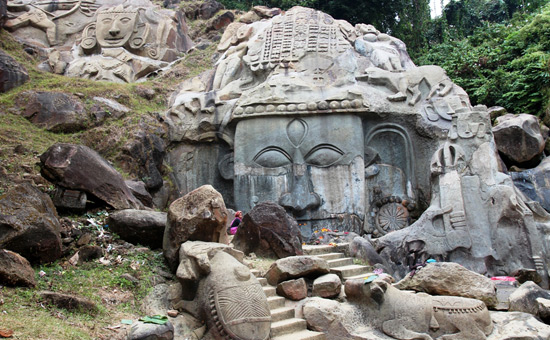 Unakoti. Bottom of pic see Nandi.
Something similar in Odisha. Senior Journalist
and author Sandhya Jain wrote in book Adi Devta Arya Devta. “Jagannatha’s tribal origins are undeniable, though the god is today inseparable from the ‘high’ Hindu panorama and is a key constituent of Orissa’s regional identity.”
2. Were there any other Scheduled Tribe Kings?
Yes.
A few examples.
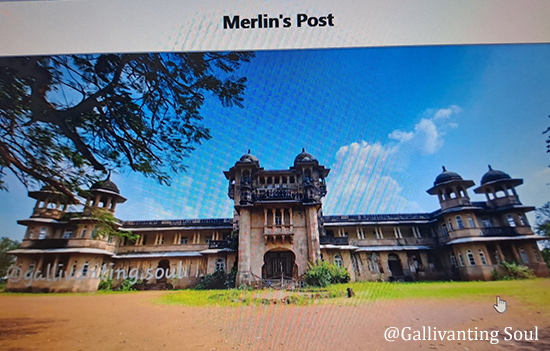 Jai Vilas Palace near Mumbai. Credits ‘Gallivanting Soul’
“The Gond Rajas of Garha-Mandla and Chanda are examples of an adivasi aristocracy that ruled in this region, and were "not only the hereditary leaders of their Gond subjects, but also held sway over substantial communities of non-tribals who recognized them as their feudal lords.” Source-Historical
Perspectives of Different Tribal Groups in India by Subhash Meena and NP
Singh Meena
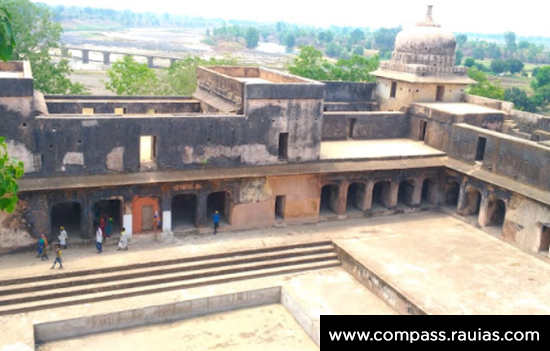 Ram Nagar Fort, Mandla near Jabalpur is on banks of Holy Narmada.
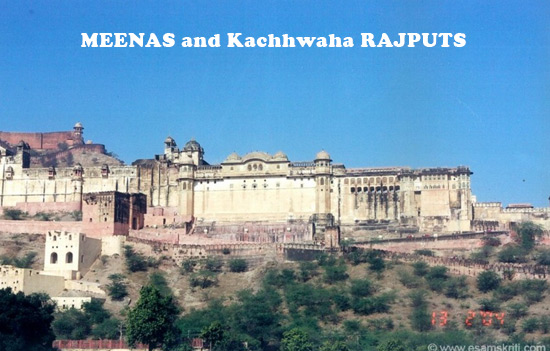 Meenas of Rajasthan (now ST) were rulers before the Kachhwaha Rajputs, the last rulers of Jaipur.
Read How
Meenas got ST status
3. Do Scheduled Tribes pay Income-tax?
No.
According
to section 10 (26) of the Income-Tax Act (excerpts), "A member of a Scheduled Tribe, as defined under clause 25 of article 366 of the Constitution, who resides in the States of Arunachal Pradesh, Manipur, Mizoram, Nagaland and Tripura is exempt from paying income-tax on any income which accrues or arises to him in these States.” Also read BT
report This exemption applies to individuals on income that accrues or
arises within the state. This cleartax.in link
says that interest on securities is also exempt, reconfirmed.
4. Result of Tax Exemption?
While
the government has their reasons for introducing section 10 (26) if today there
are two employees in a state government office in Agartala, one ST and another
non ST, the non ST shall pay income-tax on salary whilst ST is exempt.
These areas could become conduits for money laundering. A detailed
investigation of sources of bank deposits in the Northeast might be revealing.
5.
Being ST is pre-requisite to claim Tax Exemption. In Christian majority states of Nagaland, Mizoram, Meghalya, Mizoram and others like Manipur, Arunachal ST’s who converted to Christianity continue to be treated as ST by the government.
Thus, in Manipur the Meitie community (Hindus)
are liable to pay income-tax whilst Scheduled Tribes who converted to Christianity
are not. ST
converts get benefits of schemes like reservations etc.
In fact, one of
the reasons of the 2025 Manipur conflict was a court order that declared the
Meitie community to be ST.
6. Are
Scheduled Tribes across the Northeast similar?
No. I travelled to
all the northeastern states. In Mizoram, Aizwal I did not feel like I was in
India.
In
Shillong, Meghalaya, I met with tribal students learning computers at the
Vivekananda Institute of Culture, Shillong.
7 Computer training
class at Vivekananda Institute of Culture, Shillong.
During Hornbill Festival numerous programs are organised in Kohima. There is nothing ST about it. In fact, “Nagaland is known as “the only predominantly Baptist state in the world” and more than 96 per cent of the Naga people identify themselves as Christian.” Indian Express
2018
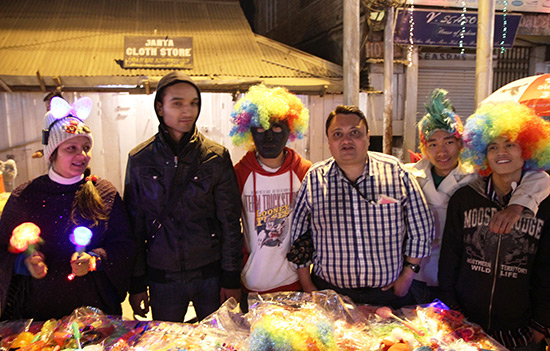 A friend with Nagas during Hornbill Festival, 2014.
At
the festival, I met many Nagas, who clad in Jeans and T-shirt was hardly be
called tribal. At the evening music concert (group from England performed) I
felt as if I was in Mumbai, Delhi or London. If you wish to see tribal then go
to Bastar in Chhatisgarh.
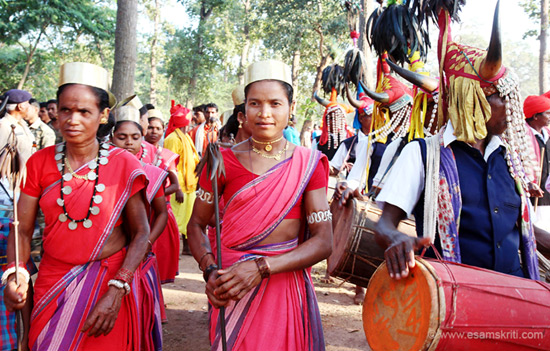 ST ladies Bastar during Bastar Dussehra. 2018.
7. Dr Maurya wrote ‘Scheduled Tribe in India – a Critical study’.
Dr
Maurya wrote in her paper, “So the state and discourse in India reject the term indigenous peoples' and prefer instead to use the Constitutional term Scheduled Tribes.” They are also called Anusuchit janjati.
Dr Maurya adds, “The Constitution of India does not define the criteria for recognition of Scheduled Tribes, but the definition
contained in the 1931 Census was used in the initial years after independence. According to Census 1931, Schedule tribes are termed "backward tribes" living in the "Excluded" and "Partially Excluded" areas. The Government of India Act of 1935 called for the first time for representatives of "backward tribes" in provincial assemblies. Under 366 clause25 article of the Indian constitution defined scheduled tribes means such tribes or tribal communities or parts or groups within such tribes or tribal communities which are defined under Article 342 to be deemed as Scheduled Tribes under this constitution.”
Read The National
Commission for Scheduled Tribes site on ST, definitions of tribal communities
adopted in the 1931 Census which forms the basis for the provision in Article
342 (1).
Concept of
Scheduled Tribes is a colonial creation. Further, the ones in the northeast are
different from those in other parts of India.
It
is time for the central government to revisit the definition and income-tax
benefits. Surely, help the poor.
Those who convert to Islam and Christianity are not ST.
The purpose of this article is to provoke thought and not hurt the sentiments of the Scheduled Tribe community, individually or collectively.
Also read and references
1.
Who are ST
2.
Are Scheduled
Tribe Converts ST under Uniform Civil Code
3.
Why CASTE Census
is Complex
4. Tripuri
Roots through Rajmala
5. 14 Gods are the kula devta of
the Tripuri people
6.
Mogs Buddhist community of
Tripura
7.
Album Tripura Sundari – Shakti Peeth
8.
Album
Temples of Tripura
9.
Album
Unakoti
10.
Dr Alka Maurya paper – ST in India
11.
How
Meenas got ST status
12.
Discovering
the Gond Palace in Madhya Pradesh
13.
ST Welfare Grant
14.
Tribal
Museum Tripura