- This is the highly motivating and stirring narrative of his journey from the lush green fields of Punjab to the frozen, blood-stained snow of the Himalayas-the saga of a hero who lived for his nation and made the ultimate sacrifice to protect its sacred honour.
This is seventh in a series of PVC awardees, the first six being on Major Somnath Sharma, Piru Singh Shekhawat, Rama Raghoba Rane Karam Singh , Captain Gurbachan Singh Salaria and Lt Col Dhan Singh Thapa
In 2013, visited memorial of Subedar Joginder Singh near Tawang and can say the terrain is very tough. It was very cold in September – Editor.
This article was
first published in the Bharatiya Vidya
Bhavan Journal.
Abstract
The epic story of Subedar Joginder Singh undeniably belongs to the latter. Standing amidst the icy, unforgiving heights of the North-East Frontier Agency (NEFA) in October 1962 during the Sino-Indian War, he did not merely command a platoon—he commanded destiny itself.
Facing
a massive, relentless Chinese onslaught while heavily outnumbered and
outgunned, he transformed certain tactical defeat into a resounding moral
victory that continues to echo through the hallowed corridors of the Indian
Army. He was not just a soldier; he was an immovable object against an
unstoppable force, a leader who proved that while ammunition may run out, true
courage is a wellspring that never runs dry.
This is the highly motivating and stirring narrative of his journey from the lush green fields of Punjab to the frozen, blood-stained snow of the Himalayas—the saga of a hero who lived for his nation and made the ultimate sacrifice to protect its
sacred honour.
Early Life and Inspirations
The extraordinary saga of Subedar Joginder Singh began on 26 September 1921, in the humble village of Mahla Kalan in the Moga district of Punjab (then part of Faridkot). Born into a modest Saini Sikh farming family, Joginder Singh was the proud son of Sher Singh Sahnan and Bibi Krishan Kaur Bhela. His upbringing was deeply rooted in the rustic, hardworking ethos of Punjab, a land historically renowned for producing saints and fearless soldiers.
Life in pre-independence rural India was incredibly arduous, and the economic
conditions of his family often bordered on poverty.
However, what they lacked in material wealth, they abundantly made up for
in moral fortitude. His parents instilled in him the unshakeable core values of
Sikhism: Kirat Karo (work honestly), Naam Japo (meditate), and Vand Chakko (share with others). He grew
up watching his father toil endlessly in the fields, learning the invaluable
lesson that nothing in life yields fruit without sweat and
persistence. The noble concept of Seva (selfless service) was a daily way of life in his household, forming the absolute bedrock of his character and his future leadership style. Furthermore, listening to the rousing ballads of Sikh history, the heroic tales of Hari Singh Nalwa, and the sacrifices of the Sikh Gurus and freedom fighters like Bhagat Singh ignited a burning fire within He did not merely want to live—he passionately wanted to serve.
School Adventures and Big Dreams
Despite the severe financial constraints that plagued his family and proved
to be a major hindrance to higher education, young Joginder possessed a
voracious, unstoppable appetite for learning. He attended primary school in the
village of Nathu Ala and later pursued middle school in Daroli. In an era where education was considered a luxury for agrarian families,
his sheer persistence in attending school was a powerful rebellion against his
circumstances.
He excelled in traditional sports like kabaddi and running races, activities where he consistently led from the front. These vigorous sports built the immense physical endurance and stamina he would later desperately need at extremely high altitudes. His teachers quickly noticed his innate discipline, his helpful nature and his undeniable spark of leadership. But it was not just academics and sports that occupied his mind; he often looked at the uniformed men returning to his village on leave with a profound sense of awe. To him, the military uniform was not just clothing; it was a revered ‘second skin’ that would endow a man with identity, glorious purpose and unyielding honour.
Becoming an Army Soldier and First Posting
Joginder Singh’s resolve to serve his motherland was so potent that he did not even wait for adulthood. On 28 September 1936, at the tender age of 15, he enthusiastically enlisted in the British Indian Army, stepping into a life of extraordinary purpose. He was enrolled in the glorious 1st Battalion of the Sikh Regiment (1 SIKH).
His early years in the army were a gruelling baptism by fire, but the transition
from a village boy to a highly disciplined soldier saw Joginder absolutely
thrive. He was never content with just being an ordinary foot soldier; he
brilliantly recognised that a modern warrior needed a powerful intellect just
as much as physical strength. Though his formal education had been interrupted
halfway, through sheer, unbreakable determination, he passed his professional
Army Education Examinations one by one. This remarkable academic achievement
allowed him to become a Unit Education Instructor.
This role was deeply pivotal. As an instructor, he was personally responsible for shaping the raw minds of other soldiers, passionately teaching them discipline, map reading and the core military ethos. He firmly believed that a commander must be a teacher first, and he commanded immense respect from his troops for being a strict disciplinarian who was never willing to compromise on rules or integrity. By the time 1962 arrived, he was a highly seasoned, battle-hardened veteran, having served courageously on the Burma front during World War II and having valiantly protected Srinagar during the fiery Indo-Pak War of 1947-48.
He was a Junior Commissioned Officer (JCO) who possessed an extraordinarily mature
mind.
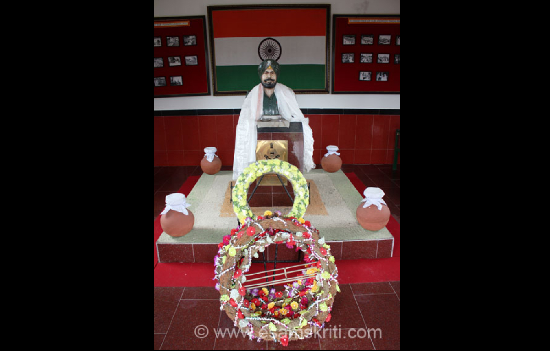 Plaque at Subedar Joginder Singh Memorial near Tawang.
The Build-Up to War
The year was 1962, and severe tensions between India and China had reached
a terrifying breaking point over border disputes. For nearly three years, China
had been meticulously and stealthily preparing for a military move, exploiting
political vulnerabilities.
At the time, Subedar Joginder Singh’s illustrious military service was nearing its end, and he was contemplating a peaceful retirement with his wife, Gurdial Kaur Banga, and their children. Suddenly, the clarion call of duty sounded. A military basketball tournament at Lucknow was abruptly cancelled, and soldiers were urgently ordered to join their battalion at NEFA (North-East Frontier Agency). The 1 Sikh Regiment was swiftly called up from a peaceful station in Jaipur.
Defence Minister V.K. Krishna Menon had taken the critical decision to
urgently deploy the army to the Bum La area, aiming to evict the Chinese army
from the southern part of the Thag La ridge. What followed was an incredibly arduous
journey for the troops: hacking through dense jungles to the Tenga valley;
navigating the dangerous, winding paths of Bomdila, climbing down to Dirang,
passing the frozen expanse of the Sela Lake, and finally arriving at Tawang.
Upon arrival, the grim, chilling reality set in. On 20 October 1962, the
Chinese army attacked the Indian post at Namka Chu, easily overwhelming the 7
Infantry Brigade. The Assam Rifles and paramilitary forces stationed in the
forward areas began to retreat, making way for Subedar Joginder Singh and the
brave men of the Sikh Regiment to take over the frontline defences.
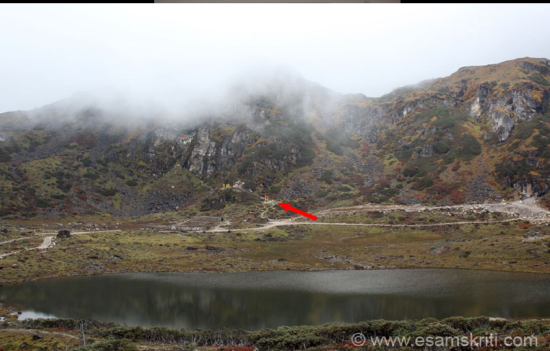 Close by is a Gurudwara, where Guru Nanak visited. It is on the way back from Bum La border to Tawang. 2013.
Battles fought in Bum La, Tawang
Subedar Joginder Singh was placed in charge of a platoon at a highly
strategic and vulnerable position on the Bum La axis, specifically at the
Tongpen La ridge (also known as the IB Ridge). The environmental conditions
were catastrophically hostile. The altitude was a breathless 16,000 feet, where
the air was perilously thin and the biting cold pierced violently through
layers of clothing.
The logistical nightmare was glaring: Joginder and his team stood in the
extreme cold without even adequate winter clothing to protect themselves.
Furthermore, he had only about 29 men under his direct command. They were
severely outmatched in both sheer numbers and weaponry. The Chinese forces, numbering
in the thousands, were equipped with state-of-the-art automatic weapons, heavy
artillery and had an endless supply of ammunition. In stark contrast, the Indian
soldiers were armed with outdated .303 Lee-Enfield rifles left over from World
War II, and their ammunition was strictly limited.
The Chinese troops who had conquered Namka Chu aggressively advanced
towards Bum La and began constructing bunkers a mere 250 yards away from the
Indian positions. Separating the two forces was only a small stream with about
two and a half feet of water.
Observing every single move of the enemy, Joginder Singh ordered his men to
dig trenches and instructed them with unyielding resolve that they must fight
to the very last bullet and the last man. Knowing the terrifying odds, he used
his incredible courage and profound wisdom to keep their morale sky-high,
remaining a colossal pillar of inspiration till the very end.
Bold Defence against the Chinese Attack
The breaking point arrived on 23 October 1962. At exactly 5:30 a.m., while
preparations for morning tea were underway in the army kitchen, the majestic
silence of the Himalayas was violently shattered. The Chinese launched a synchronised,
heavy attack aimed at breaking through to Tawang. The ominous sound of enemy
boots splashing through the shallow stream signalled the beginning of the end.
The First Wave: The enemy viciously
attacked in waves, a brutal tactic designed to overwhelm defenders through sheer
mass. The first wave consisted of approximately 200 Chinese soldiers charging
under the deafening cover of mortar and artillery fire. Subedar Joginder Singh,
remaining extraordinarily calm and focused amidst the terrifying chaos,
directed his men to hold their fire until the enemy was within absolute
effective range. When his booming order was finally given, the discipline of the
1st Sikh was absolute; they unleashed a devastating volley of incredibly
accurate rifle and light machine gun (LMG) fire. The first wave was decimated,
and the enemy was forced to retreat in total shock, leaving behind their dead and
wounded.
The Second Wave: The Chinese, realising they were facing an impenetrable wall of Sikh resistance, regrouped swiftly. Within half an hour, they unleashed a second wave of another 200 men, this time with even more ferocious energy and intensified artillery shelling. The Indian bunkers began taking direct, catastrophic hits. The platoon suffered devastating casualties; half of Joginder’s brave men were either dead or incapacitated, unable to even move.
Leadership in the Heat of the Battle
It was during the interval between the second and third waves that Subedar Joginder Singh’s leadership transcended the ordinary. During this ferocious exchange, Subedar Joginder Singh sustained a severe, agonising gunshot wound to the thigh.
Standard military protocol and the desperate pleas of his men dictated that he be evacuated immediately to the rear. But, Subedar Joginder Singh outright refused. He knew with absolute certainty that if the commander left, the morale of the few surviving men would collapse instantly. He painfully dragged himself from
trench to trench, distributing what little ammunition was left and shouting rousing
words of encouragement.
Manning a light machine gun himself, his wounded leg useless but his aim deadly steady, he shot down numerous opponents. He reminded his men of the Guru’s teachings, keeping their fighting spirit brilliantly ignited.
The Ultimate Act of Bravery and Final Words
Relentless and indifferent to their own staggering casualties, the Chinese
army launched a massive third wave. By now, the situation for the Indian
platoon was entirely desperate. They had held the ridge heroically for hours,
but their ammunition was now completely exhausted. The guns clicked empty. The
enemy was closing in rapidly, fully expecting a swift surrender.
But Subedar Joginder Singh made a decision that etched his name into the
annals of immortality. Knowing that shooting was no longer possible, and flatly
refusing to surrender, he ordered his men to fix
bayonets to their empty rifles. It was a magnificent call to ancient warfare—cold, gleaming steel against modern gunpowder.
With the few men left standing, he powerfully crawled out of the bunker. Raising his voice above the roar of the freezing wind and the heavy gunfire, he sounded the thunderous war cry of the Sikh Regiment: “Waheguru Ji Ka Khalsa, Waheguru Ji Ki Fateh!” (The Pure belong to God, Victory belongs to God), intermingled with “Jo Bole So Nihal, Sat Sri Akal”. Like a wounded, majestic tiger, he led his men in a spectral, suicidal charge directly into the advancing Chinese lines.
Subedar Kala Singh, who was close to Joginder Singh, later reminisced about
this surreal battlefield scene, noting that the Chinese forces were absolutely amazed
and paralysed with fear to see this handful of courageous Sikh soldiers, with
their flowing beards, daring to attack a massive force head-on. The sheer,
untamed ferocity of this hand-to-hand combat stunned the enemy. Like a ferocious
predator, he led his men in a charge directly into the advancing Chinese lines.
They fell upon the enemy with bayonets.
Subedar Joginder Singh and his handful of men bayoneted and killed dozens
of enemy soldiers in hand-to-hand combat. It was a suicidal charge, but it was magnificent.
Joginder Singh single-handedly bayoneted and killed
dozens of enemy soldiers (reportedly over 50) before he finally
collapsed, heavily injured and surrounded by a mountain of the enemies he had
slain.
Eventually, overwhelming numerical superiority prevailed. Subedar Joginder
Singh was taken by the Chinese as a prisoner of war. In Chinese captivity, his unbreakable
spirit refused to submit. Tragically, he succumbed to his severe wounds,
gangrene and terrible frostbite while in custody.
But his bravery commanded respect even from the adversary. In a rare gesture of military protocol and respect, the Chinese People’s Liberation Army, upon learning that he was being decorated by the Indian government, returned his ashes to the Indian battalion. It was an acknowledgement that that courage recognises no borders. Back home, the tragedy deepened profoundly as upon hearing the news of his death, his beloved daughter passed away from a broken heart.
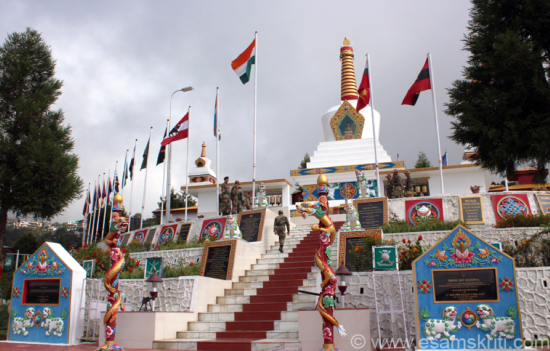 Tawang War Memorial where too Subedar ji is honoured.
Award of Param Vir Chakra
For his absolutely ‘superhuman’ action, unwavering resolve and supreme sacrifice, the Government of India bestowed upon him the nation’s highest wartime gallantry award, the Param Vir Chakra (PVC), posthumously. He became the only member of the Sikh Regiment to receive this ultimate honour during the 1962 war.
Memorials
A profoundly grateful nation has ensured his memory lives on eternally
through various majestic monuments:
1. Bum La Memorial: At the site of the battle in Arunachal Pradesh, a war memorial stands where soldiers and tourists pay homage to the ‘Lion of Bum La’.
2. Cinema: His life was immortalised in the 2018 Punjabi biographical film Subedar
Joginder Singh, starring Gippy Grewal, bringing his story to the youth of
today.
3. Maritime Honour: The Shipping Corporation of India named an oil tanker,
MT Subedar Joginder Singh, PVC, in his honour.
4. Statue in Moga: A majestic statue of the Subedar stands near the
District DC Office in Moga, Punjab, inaugurated in 2006.
Lessons from His Life
Subedar Joginder Singh’s life offers profound, life-altering lessons far beyond the battlefield:
1) Resilience and Courage: He proved
unequivocally that the human will is vastly stronger than any weapon. He
demonstrated that true courage is not the absence of fear, but standing firm despite
it. He fought with a shattered leg and no ammo; he fought entirely with his
unyielding spirit.
2) Leadership by Example: He did not
order his men to die; he actively showed them how to fight. He proved that
true, legendary leaders bleed with their team, fighting alongside them in the muddy
trenches rather than shouting empty orders from safety.
3) Duty Over Self: In an age of individualism,
his flat refusal to be evacuated highlights the supreme, divine virtue of
placing the collective good and the safety of his comrades entirely above his own
personal safety.
Today, his glorious story is taught reverently in the prestigious halls of the National Defence Academy and the Indian Military Academy. For young officers and cadets, he represents the absolute, shining pinnacle of ‘Service Before Self’.
For the youth of Punjab and the entirety of India, his journey is a poignant, empowering reminder that heroes do not fall from the sky; they rise brilliantly from the soil of humble villages. His story constantly encourages citizens to value discipline, education and the armed forces, proving forever that one
determined, fearless soul can truly hold back an entire army.
This article was first published in the Bhavan’s Journal, June 1-15, 2026 issue. This article is courtesy and copyright Bhavan’s Journal, Bharatiya Vidya Bhavan, Mumbai-400007. eSamskriti has obtained permission from Bhavan’s Journal to share. Do subscribe to the Bhavan’s Journal – it is very good.
To see
album of Bumla Border
To
see album of Tawang War Memorial
To
see album of Jaswantgarh War Memorial