- Highlights
of Supreme Court order on why converts cannot be SC. Which States consider SC
Converts as OBC? Why Scheduled Tribe converts are considered as ST? Our Colonial
Constitution and System encourage conversions.
Headline of Hindustan Times March 25 – No
SC status for those who convert: Top Court. On social media, some rejoiced
as if something new was stated. Case was about a man (Chinthana Anand) in
undivided Andhra Pradesh, who converted to Christianity but wanted protection
under the SC/ST Act. Top Court said no.
Many states have included SC Converts to Christianity as OBC – Other Backward Class. Thus, they get benefits of reservations etc even if not protection under the SC/ST Act. The system had found a way to beat the intent of the Supreme Court (SC) order. Wonder why Courts allow Scheduled Tribes to claim ST benefits even after conversion to Islam and Christianity? Read later.
Reservations
in India is complicated so presented as FAQ.
1. What is the Background to Hindus being Scheduled Caste?
In
1950, when Constitution adopted, only Hindus could be Scheduled Caste. In 1956,
Sikhs included and in 1990 to Buddhists. That is why the SC said SC could only
be Hindus, Buddhists and Sikhs.
This
provision was misused means they convert and yet claim SC benefits. Hence, the
case before the SC.
The HT report states that once convert no protection under SC/ST Act. The Court ruled that the bar under Clause 3 of the Constitution (SC) Order 1950 is “categorical and absolute” hence any Hindu, Buddhist, Sikh SC who converts ceases to be SC. One cannot be SC and Christian said the Court.
On origin of Scheduled
Caste in Constitution and Untouchability read later.
2. Examples of States that consider SC Converts to Christianity as
OBC?
1.
Central List of OBC Assam Number 22. see
link
2.
Central List of OBC Bihar Number 120. see
link
3.
Central List of OBC Gujarat Number 36. see
link
4.
Central List of OBC Tamil Nadu Number 22, 97, 101, 104, 117, 172, 181. see
link
5.
Central List of OBC West Bengal Number 52,
see
link
6. Central List of OBC Uttar Pradesh Number – could not find any, see
link
7.
Central List of OBC Number Telangana Number
51, see
link
8.
Central List of OBC Jharkhand Number 22, see
link
9.
Central List of OBC Maharashtra Number 170, see
link
10.
Central List of OBC Karnataka Number 151, see
link
Our systems encourage conversions. Results of a Colonial
Constitution.
3. Why Reservations in India?
It
is supposed to correct denial of education to SC/ST for thousands of years. According
to research done by Gandhian Dharampal SC were the
maximum number of SCHOLARS in Pre British India
4. What about Untouchability?
Alleged denial of education & Untouchability
are different issues. The latter was not uniformly practiced across India. Read
When caste was not a bad word
Example
of discrimination. D Keer wrote in Life
and Mission of Ambedkar, “The original surname of Bhim’s father was Sakpal, a family name. Bhim drew his surname Ambavadekar from his native village Ambavade. A Brahmin teacher in the High School, whose surname was Ambedkar, took such a liking to Bhim that he changed his surname to his own Ambedkar, in the schools records.”
Extract from December 2024 order by CJI D Chandrachud. “The President issued the Constitution (SC) Order 1950 which nearly corresponds to the Government of India (SC) Order 1936 notified under the PART D 89 Government of India Act 1935. The 1935 Act did not define the criteria for
the identification of Scheduled Castes. Clause 26(1) of the First Schedule to it defined the SCs as castes that corresponded to the classes of persons known as the “depressed classes.” Pg. 88/89 Source
Untouchables
were those who belonged to the depressed classes (term undefined). Perhaps,
because Ambedkar said he belonged to depressed classes.
If fully true, would Ambedkar’s Brahmin teacher share his food with him?
The SC order adds, “In 1919, the Southborough Franchise Committee adopted the test of untouchability to define the depressed class. The Committee interpreted the phrase “depressed classes” as the 'untouchability class, that is, the class whose touch or approach is deemed to cause pollution as it exists in the United Provinces. (Uttar Pradesh).” Pg. 90
Further, this concept that untouchables correspond
to depressed classes is based on a 1919 report. How relevant is that in 2026?
“The 1919 Note states that untouchability as it existed in Madras, where an untouchable’s touch necessitated immediate purification, did not exist in Assam.” Pg. 92/94 Source
So how can one treat all untouchables as SC across the
country?
6. Who are Scheduled Caste (SC)?
Dr Ambedkar used the word
Depressed Classes. In the early 1930's Gandhi coined the word Harijan or Children of God to describe untouchables. The Government of India Act 1935 introduced the term 'Scheduled Caste' for the depressed classes. It is subsequent to such classification that Ambedkar formed a Scheduled Caste Federation. It is only since the 1990's that the word Dalit entered mainstream public discourse.
Every election, the list of SC/ST keep expanding. For BJP/Congress they are a key vote bank.
7. It appears that the "backward" status they are struggling against is some ancient phenomenon.
In reality, however, their cultural and economic
backwardness (as distinct from their ritualistic status on specific occasions)
arose post 1800. What backward caste movements are attempting to achieve is a
reversal of the effects of the British policy, and restoration of the position,
status, and rights of these peoples to those that existed prior to 1800.
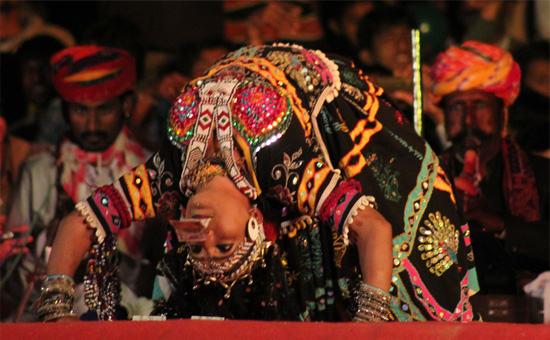 Called Gypsy by British, their Kalbelia dance might put many artists to shame.
8. Why a Scheduled Tribe who converts to Islam/Christianity is
still ST?
Para 30 of SC
order – “A person can claim benefits under the Constitution (Scheduled Tribes) Order, 1950 only if he/she continues to belong to that particular tribe in substance. If, due to conversion or long-term abandonment of tribal customs, his/her tribal identity is in doubt, that question becomes a factual matter to be determined at trial.” 4
Who is going to determine state by state across India is a particular tribe is following its customs.
Please
visit Nagaland and Mizoram today and see the ST there to see for yourself if
they are following tribal customs.
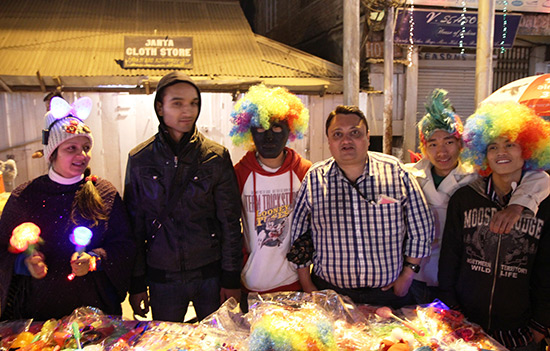 Hornbill Festival, Kohima 2014. The fair person is from Gujarat, rest are Naga ST.
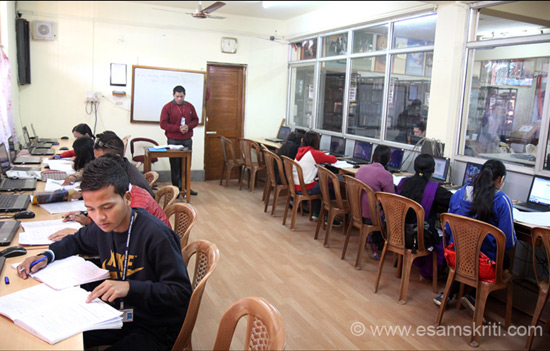 Ramakrishna Mission Computer Training Institute, Shillong. 2014.
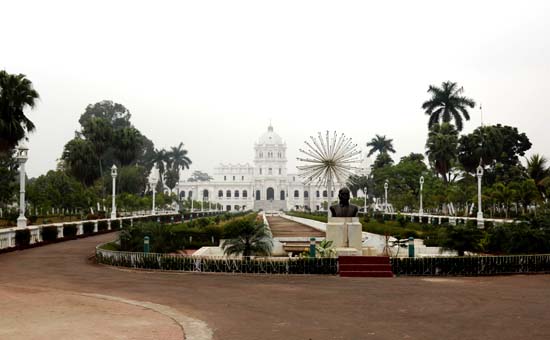 Ujjayanta Palace, Agartala home of former rulers of Tripura are ST.
Para 31 of SC order, “From the above, it becomes clear, that once a person belonging to a Scheduled Tribe converts to another religion, ultimately through the passage of time, the customs, rituals and other traits of that particular tribe may fall into eclipse.” 4
You do not need to have extraordinary intelligence to
agree with above para.
Para 39 of SC order, “It may be observed that Christianity, by its very theological foundation, does not recognize or incorporate the institution of caste. The foundational Christian scripture.” 4
Does Christianity by its theological foundation include
the concept of Tribe?
Para 55 (g) of SC order, “the Constitution (Scheduled Tribes) Order, 1950 does not prescribe religion-based exclusion. The
Constitution (Scheduled Tribes) Order, 1950 does not prescribe religion-based exclusion. The determination of Scheduled Tribe status, therefore, cannot rest on conversion alone, but must turn on whether the claimant continues to possess and is recognised for the essential attributes of tribal identity, including customary practices, social organisation, community life, and acceptance by the concerned tribal community. Where conversion or subsequent conduct results in a complete severance from the tribal way of life and loss of community recognition, the foundational basis for Scheduled Tribes status will stand eroded.” 4
Who is going to determine state by state across India is a particular tribe is following its customs?
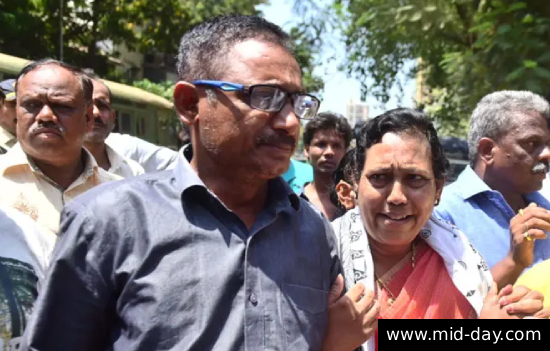 Parents of late Payal Tadvi ST whose family converted to Islam is considered ST.
Dr Alka Maurya wrote in ILJMH.com, “So the state and discourse in India reject the term indigenous peoples' and prefer instead to use the Constitutional term Scheduled Tribes.” They are also called Anusuchit
janjati.
Dr Maurya adds, “The Constitution of India does not define the criteria for recognition of Scheduled Tribes, but the definition contained in the 1931
Census was used in the initial years after independence. According to Census 1931, Schedule tribes are termed "backward tribes" living in the "Excluded" and "Partially Excluded" areas. The Government of India Act of 1935 called for the first time for representatives of "backward tribes" in provincial assemblies.”
Is India post-independence going to work
based on a 1931 Census and Colonial governance?
To read SC order in PDF click on PDF. I have SC order but not uploading saying file corrupt.
As
always am happy to stand corrected. It is not my intent to hurt sentiments of
any individual or community. Love.
Also read and References
1. Reservations
in Indian Explained
2. Explained
OBC Reservations
3. Were
Backward Classes always suppressed in India
4. SC
order of 24/3/2025 Criminal Appeal 1580 of 2026
5. Who
are Scheduled Tribes
6. Can
India become a Casteless Society
7. Former
rulers of Tripura are ST
8. Caste
Census must ask ST if they are Hindus or Christians/Muslims
9. Untouchability
was a key parameter used by the British to identify Scheduled Caste