- What
is a Baori? What are benefits of Baori? Arvind Singh Mewarji on why water management is important. Why Lake
Restoration Matters? Role of Temple Water Tanks. Ideas to revive water bodies. It
should be mandatory for Gated Communities to have Wells. Water Conservation
needs to become a National Mission.
Late
Vimla Patil wrote, India’s Seven Sacred Rivers It is only in India that rivers are considered sacred.
Traditional
forms of water harvesting has always been close to my heart. This May 2026 Tribune report, Home Guards revive
1,836 traditional bauris across Himachal Pradesh, triggered this
compilation.
Home Guards of Himachal Pradesh, “Organised clean-up drives, removed silt and plastic waste, restored catchment areas, reopened natural runoff channels, and undertaken plantation drives to stabilise slopes and recharge springs.”
Speaking about the initiative, Satwant Attwal Trivedi said, “In Himachal, water has always been regarded as a sacred life force. Springs were believed to be gifts of the gods, flowing through rocks and forests to sustain human settlements. Most bauris were thus built in the presence of a local deity. A small shrine often marked the source, while peepal, ban or deodar trees stood guard beside it. Polluting a bauri was seen as a spiritual transgression believed to invite divine displeasure.”
She added, “Long before formal governance, bauris were governed by custom and conscience. The first water of the day was often
drawn for worship.”
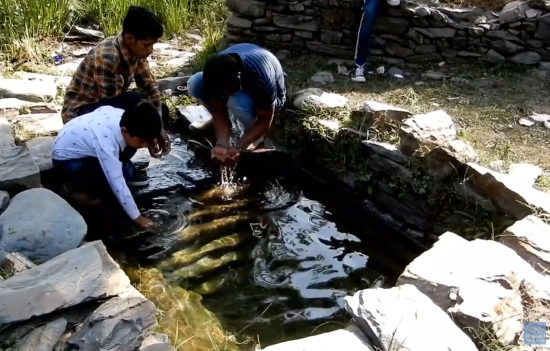 Baori in Himachal Pradesh. Pic credit Tribune Chandigarh.
What is a Baori?
Baoris
is a deep, stone-lined pit accessed by descending steps.
What are benefits of Baori?
Ms Trivedi said, “The benefits are tangible. Revived water bodies now support households, livestock and small farms. They also serve as critical water points for forest-fire response, reducing dependence on distant sources.” Read Nau and Dhar – Kumaon
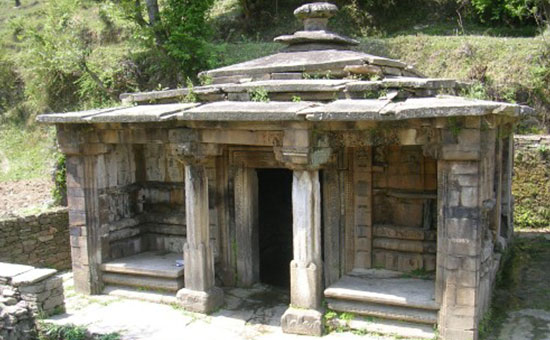 Naul, Kumaon is a traditional form of water harvesting in Uttarakhand.
What did late Late Arvind Singh
Mewar say on water management?
“The greatest need of the hour is proper management and adequate conservation of water. If the present scenario continues it can eventually lead to the compulsion of importing water in future. Inter-connection of rivers cannot be the only alternative to meet water scarcity.” Source
There
is a lot we can learn from the former rules of Udaipur. Udaipur is called The City of Lakes. Jaisamand Lake near Udaipur, supplies drinking water to
Udaipur
and for irrigation.
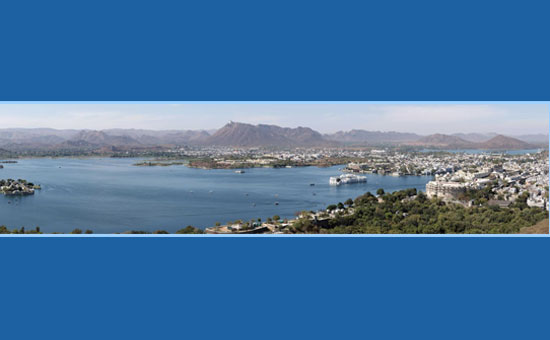 Pichola/Fate Sagar Lake, Udaipur. Lakes were made close to human habitation.
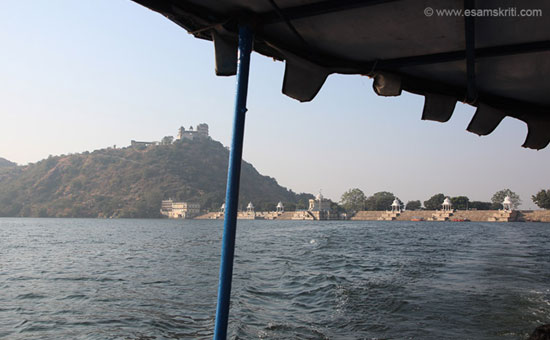 Jaisamand Lake near Udaipur (built 1653-1691) supplies water to this day.
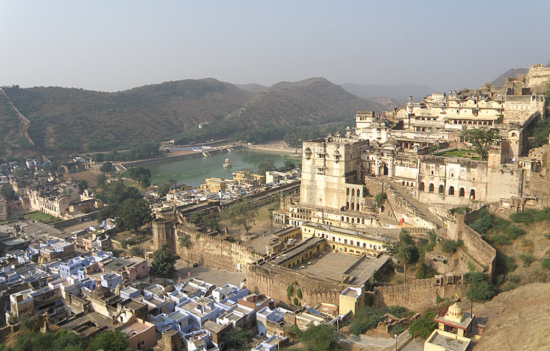 Nawal Sagar Lake, Bundi Fort.
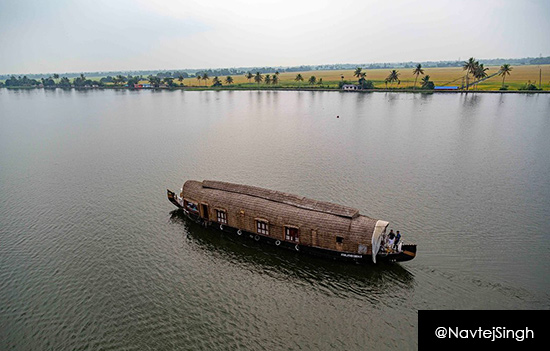 Lake in Kerala, Vembanad Lake.
Why Lake Restoration Matters
Marpu Foundation wrote, “Clean lakes recharge
groundwater, provide natural flood buffers in increasingly unpredictable
monsoons, support fisheries, and create green recreational spaces that improve
urban livability. Healthy lakes also enhance biodiversity by providing habitats for birds, fish, and native plants. They contribute to local climate regulation by cooling surrounding areas and storing carbon.” Source 10
Have you heard of floods in Udaipur
Region?
Temple Water Tanks were a source for water earlier for e.g.
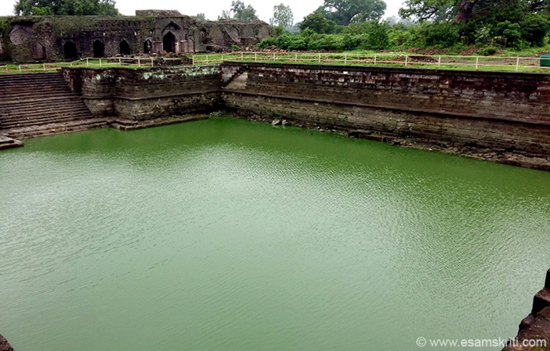 Somvati Kund, Mandu, Madhya Pradesh.
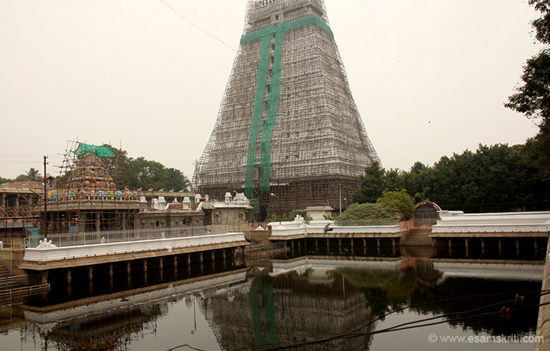 Arunachaleshwar Temple Tank, Tamil Nadu.
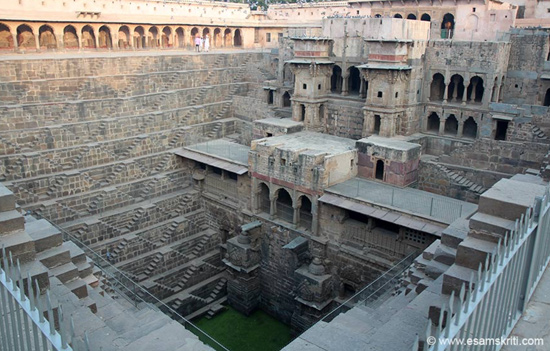 Chand Baori Step Well, Rajasthan. Close by is a Durga Temple.
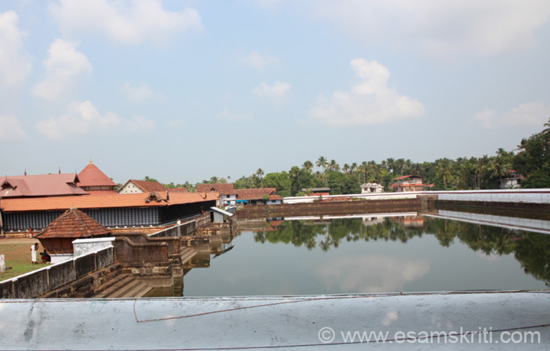 Sree Bharata Temple Tank i.e. Thrissur in Kerala.
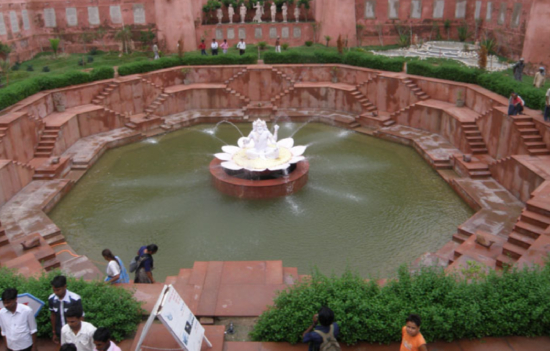 Brahma Kund Restored, Vrindavan, Uttar Pradesh.
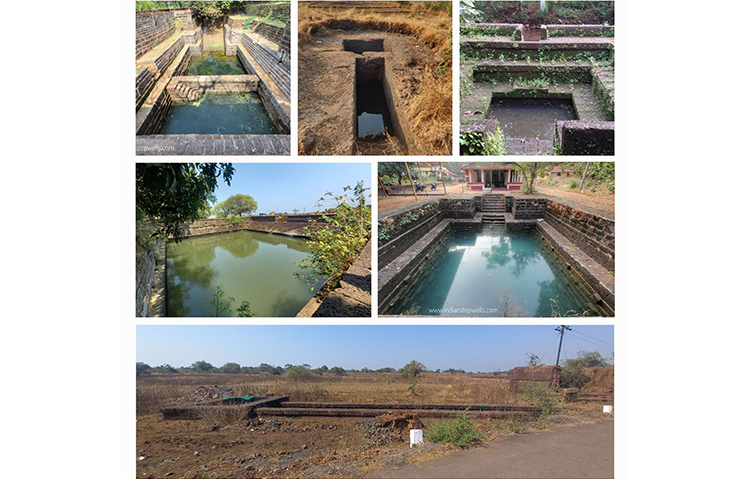 Step wells Konkan, Maharashtra.
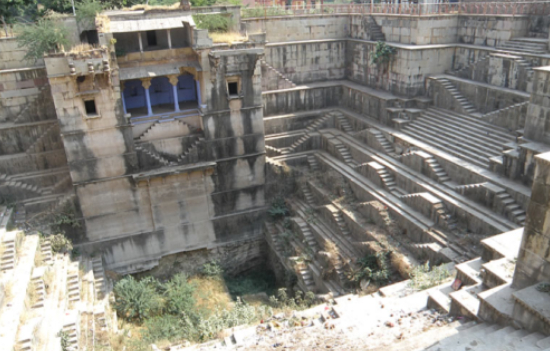 Dhabaigka Kund, Bundi is 51 feet deep. 2008. Would be restored by now.
Temple
water tanks were inside the temple complex or outside it. Step-wells are
invariably close to or part of a temple complex. However, with the government
taking over management of temples and their inability to manage them most
step-wells gone to disuse like Dhabaigka Kund, Bundi. However, many being
revived due to private efforts.
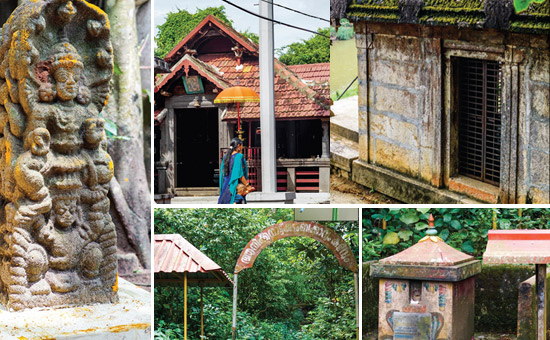 Sacred Groves of Kerala.
 Kerala had sacred groves. “In
Hindu culture sacred groves are associated with supernatural entities. As a
rule, the natural vegetation is left uncultivated and undisturbed. Many are
associated with ponds and streams, both natural and man-made. Such groves are known as kavu in
Malayalam, devbhumi in Hindi, kovil kadu or swamichola in
Tamil, devarakadu in Kannada and devrai in Marathi.” Read Sacred
Karu Groves of Kerala
Ideas to revive Water Bodies
Water
harvesting and conservation expenditure is eligible as part of CSR (corporate
social responsibility) for India Inc.
Revival
has to be a private private effort between the owner of step-well/consumer of
water and India Inc / private trusts. The state government can create a website
that lists down step wells that require restoration. They can facilitate by connecting
parties. Braj Foundation, Delhi and Mathura are doing a good job in reviving
step wells, tanks etc. in the Braj region of Uttar Pradesh.
So also, Trusts/Foundations should be encouraged to promote urban forests, natural vegetation in rural areas – the modern equivalent of sacred groves. Reliance Foundation is proposing an urban forest along Mumbai’s Coastal Road. The state government can create a website that lists down land available for such use by town. They can facilitate by connecting parties. Land ownership, as long as not used for commercial purposes, shall be on lease to the Trust.
Conduct
regular mechanical remove of accumulated sediment and aquatic plants in water
bodies is key. Do it with assistance of the local government or Trusts
What
is required are strong local communities to monitor water bodies. They can also
work together with farmers to avoid excess ground water usage and find
innovative local solutions. The community needs to be alert when the builder
lobby fills waterbodies or uses wetlands. Remember residents of buildings can
survive only if there is water.
It should be
mandatory for Gated Communities across India to have in-house wells whose water
is atleast used to wash cars.
Amita Bhaduri, “advocates for
comprehensive monitoring systems employing advanced remote sensing and GIS
technologies, providing real-time data for adaptive management strategies.” Source Reviving India’s Water Bodies
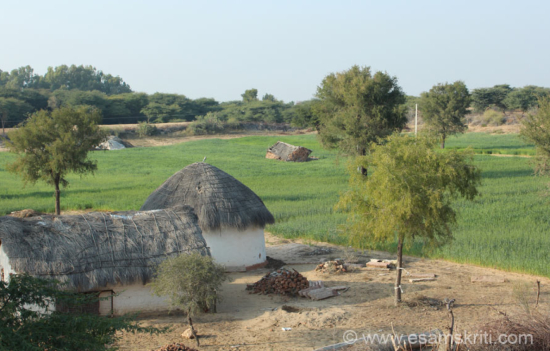 Green belt near Indira Gandhi Canal, Bikaner, Rajasthan.
It
is good to have big plans etc. to meet demands of a rising population. However, traditional forms of water
collection can supplements these efforts.
We
must remember WATER SUPPORTS LIFE, no water no life.
Those who have doubts should visit the Bikaner region of Rajasthan and see transformation brought by the Indira
Gandhi Canal.
Water Conservation needs to become a National Mission.
Also read
1.
Traditional Methods of Water Harvesting – Rajasthan
2.
Naur and Dhar – Himalayas
3.
Why do Temples
have Step wells and Tanks
4.
Life sustaining
role of the Aravallis
5.
Rani-ki-vav
Step-well Patan, Gujarat
6.
The Vanishing
Temple Ponds of Kerala
7.
Sacred Kavu Groves
of Kerala
8.
Step wells of Maharashtra
9.
Reviving India’s Water Bodies
10.
How
to restore Polluted Lakes in India
11.
Water
Bodies Rejuvenation
12.
Why
INDIRA Gandhi Canal is lifeline of the DESERT areas of Rajasthan
13.
Floods in North India – Are we manufacturing disasters