- Based on his travels, the author makes a strong case for India to have Partition Museums. Declaring August 14 as Partition Horrors Remembrance Day is a good start. The generation born before 1970 will relate and must do.
The last twelve
years have seen an increase in Hindu awareness in India esp. post the 2014 election
result.
The Ram
Janmabhoomi issue was central to the rise of the BJP from 1989 onwards. It did
not represent just another random issue; it represented long quelled Hindu
aspirations that we ignored by the Congress government. The 42nd
amendment to the constitution of India in 1976 made India a secular republic.
Only much later did an explosive interview by the veteran CA and RSS ideologue,
S Gurumurthy reveal that Nehruvian secularism was nothing but a
systematic, deliberate, pre-determined and pre planned insult of Hinduism
in post-independence India. That 1988 interview turned me into a lifetime
supporter of the BJP even though I am aware that it cannot score a six off
every ball.
Another guiding
force in my life was the complete history of World War II. Some incidents point
to past life regression issues, which indicate that in my earlier existence, I
may have fought in the war as a combatant at a senior level, maybe as a
Wehrmacht army officer. For reasons unknown, I admired Germany from
a young age. However, there was only contempt and loathing for the Nazi party
and the SS, which had completely kept a great nation in captivity under the
garb of nationalism and perpetrated a crime like the Holocaust, which resulted
in about 6 million Jews killed between 1933 to 1945.
The first book I
read on the Holocaust was the 1955 Leon Uris novel Exodus. The book was searing in its intensity and for the first
time, I learnt of concentration camps across Germany, Russia and Poland. I then
read up as much as I could on the Holocaust and became an authority on World
War II over time. My career as a finance professional took off in 1994 but my
reading on the war and the Holocaust continued.
My first visit to the UK took place in 1990. That is when I visited the Imperial War Museum in London. The life like replica of the biggest concentration camp – Auschwitz shocked and fascinated me, as did the terrifying pictures of the systematic killing of some of the most privileged citizens of Europe, also with killings of Slavs, Romanis, Homosexuals and other subversives as per the Third Reich.
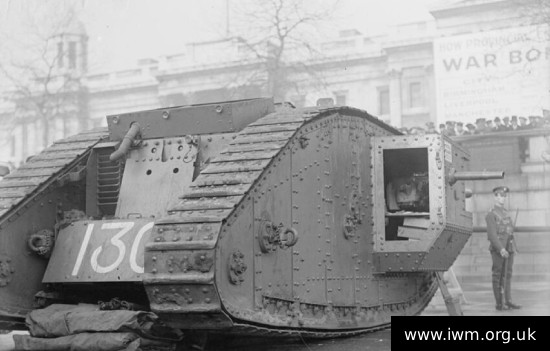 Tank in Trafalgar Square, U.K.
In 2012 I visited the US for the first time. During the trip visited Holocaust memorials in New York, Washington. These were free, as the upkeep was paid for by some large charitable trusts with Jewish support. Some big organizations were the benefactors – Goldman Sachs, Baruch Business School, Salomon Brothers. After I came out of these memorials, I sat quietly for around fifteen minutes oblivious to the beautiful fall day around me.
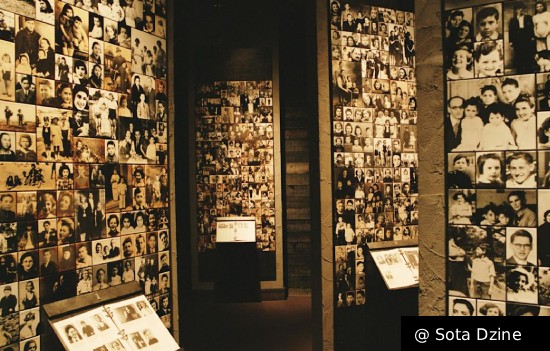 Museum of Jewish Heritage, New York.
In 2025, my wife
and I decided to go to Central and Eastern Europe. Poland was a country I long
wanted to visit and we travelled from Warsaw (a beautiful city completely
destroyed in World War II) to Krakow. Enroute, we stopped at Auschwitz. Nothing prepared me for the sight of the
biggest concentration camp, now in Poland but always part of Germany – for reasons crystal clear.
The camp had been maintained as it was at the time of liberation in 1945. The victims were mostly affluent people, their luggage, their shoes, their watches were all top brands of the 1940s. Their hair had been shorn off and even these were maintained as it was. Pictures were heartbreaking – men, women and children – many with typical blond hair, blue eyes and sharp features. After
the two-hour tour both of us sat in complete silence till we reached our
hotel at Bronowice in Krakow.
Our Cosmos guide told us that it was necessary to keep the camp as it was, as there were many holocaust deniers – people who said that the accounts of 6 million killed were all Zionist propaganda. Post the October 2023 Gaza conflict, the number of holocaust deniers have increased globally.
A similar holocaust has happened in India at the time of India’s Partition in 1947. Yet, given our sense of history, we
do not remember the partition as a holocaust for Hindus and Sikhs. In
Punjab, the exchange of population was complete. Muslims from East Punjab went
over to Pakistan and Hindus and Sikhs came over from West Punjab to Delhi and
other parts of India. In Bengal, the exchange of population was incomplete and
many Muslims were reluctant to go over to East Pakistan (now Bangladesh).
The borders with
West Pakistan were sealed completely and successive wars ensured that this
border was always guarded. The East Pakistan border remained porous from 1947
to date. This has aided illegal immigration from Bangladesh post 1971. The
following incidents are live examples of ethnic cleansing of Hindus in Bengal:
1. Great Calcutta
killings of 1946
2. Noakhali
killings of 1946
3. Repeated incidents between 1950 – 64, when there were major communal riots following the theft at Hazratbal, Kashmir
4. Babri Masjid
demolition, 1992
The question
arises that if we do not remember such incidents we might not learn from and
remember history.
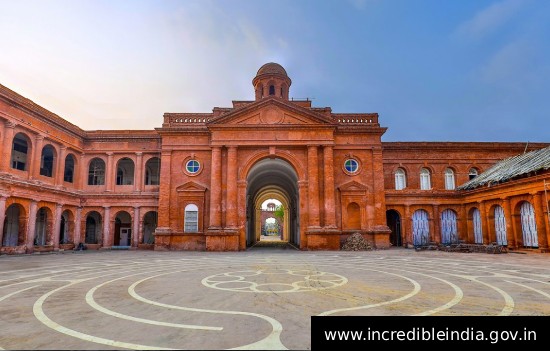 Partition Museum, Amritsar. Understand it is managed by a private NGO.
Today, post the 80th
anniversary of Independence Day we need to ensure that the horrors of partition
are remembered just like the Jewish Holocaust in World War II.
This
requires setting up of memorials in West Bengal, Delhi, Assam and Tripura that
focus on ethnic cleansing of Hindus and Sikhs in these areas.
The Congress will
never do it. If at all, only the BJP can do it. If the museums are government made
and run that would be better.
This vast project
needs a plan, a mindset and execution. There is a Partition Museum in Amritsar
(that focuses on Sikhs), but none in Kolkata. Bengal is now rebooting itself
after half a century of stagnation and hubris, which will go down in history as
the dark ages of the community. This is the right time to start building a
memorial which will tell us how our ancestors fought to keep their culture, religion
and State alive. At times they sacrificed their lives for it. There is little
time left, let the countdown to inauguration commence right now.
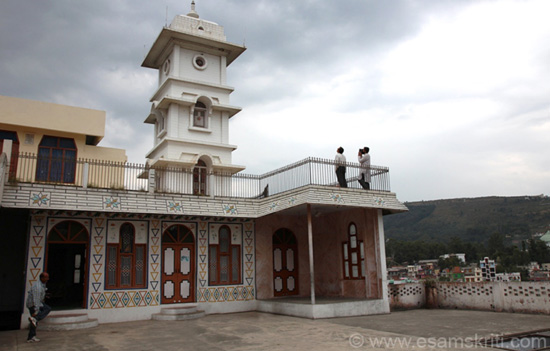 Balidan Bhawan, Rajouri, Jammu Region. 2014.
A private Balidan Bhawan (to
see pic 8 onwards) exists in Rajouri, Jammu region. It has pictures of those
who were killed during 1947-48. It is a good effort but in one corner of India.
The nations needs a bigger museum.
To read all articles by author
Also read
1. Direct Action Day 1946
2. All you wanted to know about the PARTITION OF BENGAL
in 1905
3. Matuas of Bengal – Before and After Partition
4. Who was responsible for Partition
5. Partition Museum
Amritsar
6. Album National War Memorial