- Death
of Henry Nowak in the UK. FAQ tells When did the tradition of carrying kirpan start
and why? How the British cemented this tradition? Karma strikes back.
The
purpose of this piece is to share a historical perspective on kirpan, tell about the origin and purpose of the 5 K’s, why it became important and deeper meaning behind each 5K including the kirpan. Disclosure-Father’s Ma or my Dadi was Sikh.
The
Tribune Chandigarh reported the killing of a boy by a Sikh using a kripan. The report stated, “The murder of 18-year-old Henry Nowak in Southampton has reignited debate in the United Kingdom over the legal right of Sikhs to carry a kirpan, a ceremonial knife worn as part of their faith. The discussion follows the conviction and sentencing of Vickrum Digwa for killing of Nowak. During court proceedings, the judge noted that Digwa was carrying both a kirpan and a larger bladed weapon, with the latter being used in the fatal attack.”
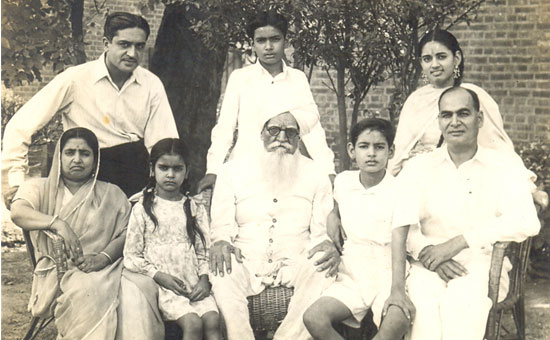 My great grand-father (paternal) 1948.
In which year did the tradition of carrying a Kripan start?
A kirpan is one of the 5k’s introduced by the 10th Guru, Govind Singhji in 1699, the other four being Kesh (long hair), Kangha (comb), Kara (steel bracelet), Kachcha (knickers). Read Why do Sikhs wear Turbans & Origin of name Kaur
Not all Sikhs sport the 5k’s. Today, mainly Amritdhari Sikhs who carry.
Is carrying a KIRPAN essential to Sikhism?
According
to this 2019 article in The Week, “The 16th Generation descendant of Guru Nanak, Baba Vikramaditya Bedi does not sport the 5Ks because his great grand- father believed 5Ks
were only for time of war.
The New York-born Vikramaditya says, ‘The Five Ks came from the 10th Guru,’ ‘My great-grandfather Baba Shib Dayal Bedi would relax these rules in our family, as he believed the five Ks were only for a time of war.” Like all descendants of Guru Nanak today, Vikramaditya traces his lineage to him through the guru’s son, Baba Lakhmi Chand. The guru’s other son, Sri Chand, was an ascetic who never married.”
So what is the historical perspective to carrying of kirpan
becoming mandatory?
Sikhs started carrying kirpan only after 1699. Here is
why -
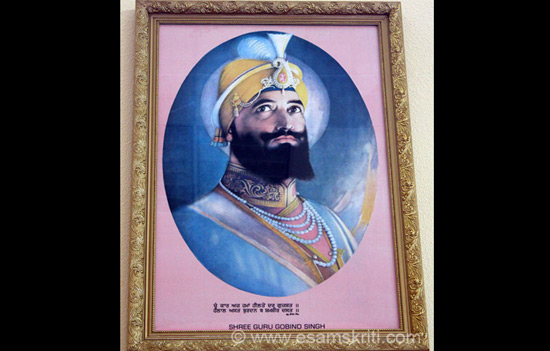
On 30 March 1699, at Anandpur, the 10th Guru Govind Singhji gave a stirring speech to the assembly about the need to protect their spiritual and temporal rights. He then asked if anyone would offer his head in the services of God, Truth and Religion. The five came forward were designated the Five “Beloved Ones” and termed “Khalsa” (i.e. Purified).
According to Khalsa tradition, its followers had to
sport the five Ks i.e. Kesh (long hair), Kangha (comb), Kirpan (sword), Kara
(steel bracelet), Kachcha (knickers).
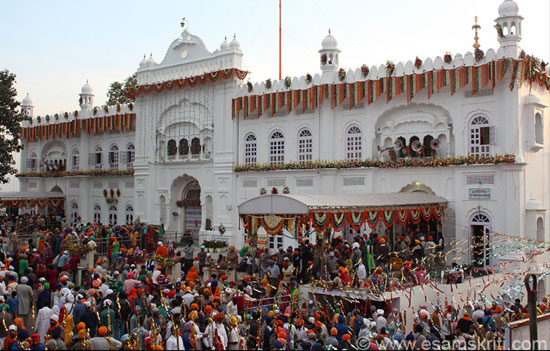 Keshgarh Sahib Gurudwara where Khalsa was founded in 1699. 2014.
What was the practical reason behind the five external forms of
Khalsa?
The
turban helped manage the long hair. The
10th Guru give his followers an identity and importantly protect
their face and head from sword cuts and lathi blows. Kangha or comb was required to keep beards in proper shape so they
looked impressive and manly. The Kara
was a reminder that the Sikh spirit was strong and unbending. The Kachcha was more suitable for fighting
the Mughals. The Kripan was for
self-defence and protection of the oppressed. 3 pg. 326 The Kara was also useful in hand to hand fights and “guarded the vulnerable portion of the right hand which wielded the kripan.” 1 pg. 80
Fast forward to 1860's and 1925
Having
experienced the strength of Sikh opposition during the Anglo-Sikh wars and
grateful for the assistance received from Sikh princes during the Mutiny of
1857, the British realized that Sikhs would be an effective buffer between
Afghanistan and India. Therefore, the British reduced the number of Bengali
soldiers (many of whom were involved in the 1857 Mutiny) and replaced them with
loyal Sikhs and Punjabi Muslims.
Khushwant
Singh wrote in 2, “Only Jat Sikhs were enlisted in the army (Sikhs of lower castes such Mazhabis, Ramdasias were excluded). The most important decision taken was to assure the Sikhs who joined the army that the traditions of the Khalsa would not be interfered with.” Pg. 112 This meant that the five external forms of Khalsa were permitted. Read more Here
This implied that only those Sikhs could join the army who sported the five k's.
In 1925, the Sikh Gurudwaras Act was passed. Under Section 2 (9) the Act’s definition of a Sikh leant strongly towards the exclusivist Khalsa view and is “one who believed in the ten gurus and the Granth Sahib, and was not a patit (apostate). This last proviso was particularly odious to the Hindu members of the Legislative Council.” 2 pg. 212 A reading of the
Act states that a person had to declare he had no other religion.
In
the context of Sikhs a patit is one
who does not follow Sikh Rehat Maryada. Trimming of the long hair, idol
worship, smoking, following the rituals of other faiths, or not following Sikh
religious injunctions makes one a patit.
The
government of post independent India carried forward the definitions passed on
the British. If only, they had studied history of Punjab!
Dr
Birendra Kaur wrote in The Khalsa:
Substratum and Significance, “The word kirpan is derived from two words – kirpa
(compassion) and aan (honour). The Guru’s soldier who carries a kirpan
is a saint soldier who is answerable to the Almighty alone. His/her
responsibility is to fight injustice. A kirpan is easy to carry and indispensable in hand to hand fight. It never runs out of ammunition and does not require license of any government.” Pg. 94 The moot point as stated earlier, are Sikhs still in days of war like what existed when the 10th Guru was alive in 1699.
Is it ironical that it was an Act passed by the British and their actions that, made carrying the 5 K’s mandatory one of which was the kirpan, is in 2026 responsible for the death of who appears to be a English boy.
Karma
has its ways of getting back.
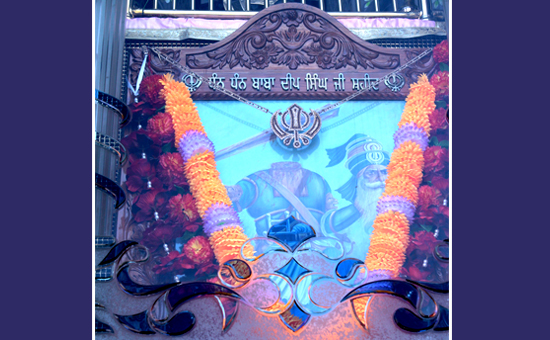 Baba Deep Singh Ji, head
cut off in fight with Jamal Khan. Holding head in hand he reached Hari Mandir.
Baba Deep Singh Ji, head
cut off in fight with Jamal Khan. Holding head in hand he reached Hari Mandir.
You
do not have to agree. Read and decide for yourself. As always, am happy to
stand corrected.
References
1
A History of Sikhs, Volume I by Khushwant Singh
2
A History of Sikhs, Volume II by Khushwant Singh
3
The History and Culture of Indian People Volume 7, published by Bhartiya Vidya
Bhavan.
Also read
1.
How the British
divided Punjab into Hindu and Sikh
2.
Is SGPC trying to
become a Sikh Vatican
3.
Album Hola Mohala
4.
Golden Temple
album
5.
Is modern day
Sikhism a colonial construct
6.
To read all
articles on Sikh History
7.
Caste in Sikhs
8.
Have
you heard of Brahmin Sikhs