- What is Bhajan Clubbing that Gen Z is taking to? Who are the Famous Bhajan Clubbing Artists? Which are recent mega events held for e.g. on New Year. Change is synonymous with Sanatan Dharma.
India’s ongoing civilizational and cultural resurgence defies many preconceived notions about Bharat and Bhartiyas. As the country comes out of the shadows of her colonial legacy, it charts its own unique path characterized by a seamless synthesis of tradition and modernity.
In the New India, tradition and modernity are not at loggerheads. Rather, they thrive in each other’s company. We are living in times when Hindu spirituality effortlessly meets AI, the distilled wisdom of age-old epics becomes a part of the course curriculum of management Gurus, and social media and sophisticated AI algorithms become a powerful weapon for the propagation of Sanatan Dharma and Vedic heritage and culture.
Yet another highlight of India’s civilizational and Dharmic resurgence is that Gen Z (those born between 1997 and 2012) are at the forefront of driving this change. Talking about India’s Gen Z, they are literally defying all negative stereotypes typically associated with youth. They are ditching typical alcohol and drug parties for non-alcoholic, clean, good fun rooted in a Dharmic ethos.
Bhajan clubbing has become a rage amongst India’s Gen Z over the past couple of months. Party culture is typically associated with alcohol, smoking, overtly toxic and almost cringeworthy vulgar vibes, and head-banging music. This largely homogenized party culture, combined with crass commercialization, has been the de facto norm for youth having fun for a long time.
India’s Gen Z is breaking these shackles by pioneering a brand-new form of performance music, rooted in the timeless wisdom of Sanatan Dharma.
What is Bhajan Clubbing?
Simply put, Bhajan clubbing is a newfound style of live music and
jamming where performers render traditional Bhajans, blending devotional songs
with modern instruments like guitars and electronic beats.
Whilst traditional Bhajans revolving around stories from the Epics and feature devotional odes to Gods and Goddesses – Bhagwan Shiv, Bhagwan Ram, Radha-Krishna, etc, a typical bhajan clubbing session gives
the feel of a slightly mellowed-down rock concert.
With Gen Z dominating the audience and most of the crowd dressed in hip jackets, high boots, and ripped denims, the overall vibe is infectiously youthful and contemporary. With young men and women chanting along, immersed in the pure divinity of Bhakti Rasa, and chants of “Sri Krishna Govind Hare Murari” echoing manifold, bhajan clubbing comes across as the ideal contemporary manifestation of India’s spiritual traditions.
With dim lights, collective dancing, and immersive music, bhajan
clubbing gatherings recreate the vibes of a club with decorum being maintained.
Bhajan clubbing gatherings are alcohol free, implying that it is possible to
have fun without substance abuse and intoxication.
The almost dramatic surge in popularity of bhajan clubbing overnight indeed throws up some interesting patterns – that Gen Z has an innate desire to connect with its Dharmic and spiritual roots. A generation that feels somewhat intimidated by the formal structure of Bhajan and the strict traditional vibes of kirtans and bhajan gatherings held in a conventional style, are fascinated by bhajan clubbing; it helps them reconnect with their Dharmic roots in a way that feels contemporary, chic, stylish, and cool.
Rising Popularity of Bhajan
Clubbing in India
Bhajan clubbing is being written about by the Indian media over the past 2-3 months. In fact, such is the extent of craze for this new form of spiritual jamming that searches for terms like “modern kirtan”, “bhajan clubbing” and “sober rave India” have reportedly risen by a whopping 400-600% since early 2024.
It is not as if this genre of music sprang up overnight. ISKCON youth gatherings, involving kirtan performances, by young people from across the world have been growing increasingly popular. To this add meditation by Art of Living, both on social media have played a significant role in shaping youth culture in India and drawing Gen Z’s interest in spiritual music genres like bhajan and kirtan.
From major metropolitan cities like Delhi, Mumbai, and Kolkata, to cities like Pune, Surat, Hyderabad, Chandigarh, Vrindavan, Jaipur, and Indore, young people are turning up for bhajan clubbing concerts in large numbers, filling café-turned concert halls and darkened auditoriums. Most of these concerts are not free.
Bhajan clubbing is going mainstream to the extent it has begun threatening the popularity of the “Sufi nights” trend that had majorly characterized the clubbing scene in Indian cities for the past 15-20 years.
On the night of December 21, Delhi’s Indira Gandhi Sports Complex hosted a three-hour bhajan clubbing performance attended by around 5,000 people, many of them in their twenties. With innovative marketing tactics, the event created a formidable buzz around spiritual tourism, with face painting stalls turning the application of Tilak into an aesthetic art form, food stalls, along with prasad hampers from Mathura and Vrindavan.
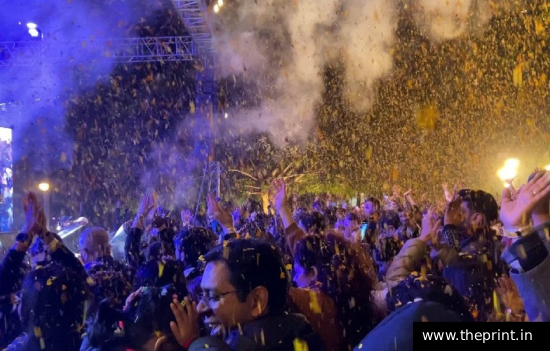 Marigold flowers at a bhajan clubbing event on 21/12/25 Delhi. Credits ThePrint
A unique bhajan clubbing event was held in Hisar, Haryana where a
renowned Haryanvi singer performed devotional songs to welcome the Gregorian
New Year. A special band also performed during the event, blending traditional
bhajans with live dance music. According to the organizers anyone under the
influence of alcohol was denied entry. On January 1 milk and jalebis were
distributed as part of the celebrations.
Famous Bhajan Clubbing
Artists
The bhajan clubbing trend in India is popularized largely by the
brother-sister duo of Prachi and Raghav Aggarwal, who created a band called The Backstage Siblings. What started as an informal jamming session
with around 50 people just a year back has now turned into full-fledged bhajan
jamming tours attended by thousands.
Raghav and Prachi’s jamming sessions are easily accessible on YouTube. The repertoire includes popular bhajans, but is not restricted to that. Prachi and Raghav dexterously mix other Bollywood or Sufi numbers with Bhajan tracks in a soulful jamming session that feels soulful, spontaneous, and effortless. They frequently play popular bhajans such as “Ram Ram Jai Raja Ram Ram Ram Jai Sita Ram” and “Sri Krishna Govind Hare Murari”.
In a video interview with India Today, the duo shares that 85 percent of
people who attend their concerts are from the 18-30 age group. They also say
that the strict no-alcohol protocol is not a deterrent for Gen Z when it comes
to attending their concerts; rather, they like it that way. Hear How
Raghav n Prachi are making Bhajan cool 15 minutes
Another prominent name in the bhajan clubbing genre is Radhika Das, an
international artist who renders mantras in an Indo-Western classical fusion
style, often merging instruments such as the harmonium, violin, and guitar. The
concerts give a somewhat classical feel, yet manage to perfectly capture the
essence of basic mantras and chants like Om Namah Shivay. Unlike a spontaneous
live jamming session, these are carefully curated concerts with different music
styles such as jazz and reggae interspersed in between to keep the audience
mesmerized. The concerts blend different international music genres in a way to
make it easy for a foreign audience, unfamiliar with bhajans and mantras, to
connect with their powerful aura. Radhika
D U Tube
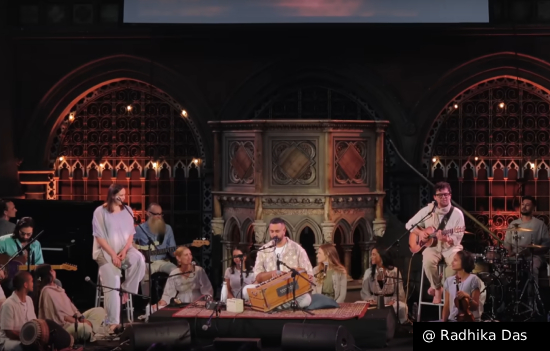 Radhika Das performance, UK.
Another popular bhajan clubbing group is Nandagovindam Bhajans, known
for its interactive bhajan sessions where people can sing along and become a
part of the spiritual experience. They are known for high-energy concerts
attended by people across all age groups. The focus is on audience
participation as the singers freely join the audience in between and encourage
them to participate in the chanting and bhajan singing. Unlike the more
contemporary bhajan clubbing groups, the overall vibe is more traditional in
their performances; nevertheless, it gives that high-energy concert feel. Hear Nandagovindam Bhajans on U Tube
One of the reasons why Sanatana Dharma has survived for millennia because
it has changed with the times. Bhajan Clubbing is an example of how Bhajans/Chanting
have become cool for Gen Z. It is good to have an open mind and blend different
schools of music / thought.
References
1. India
Today
2. Hinduism
Today
3. Indian
Express
4. ThePrint
5. New18
6. CurlyTales
7. Times
of India
8. DNA
9. https://www.youtube.com/watch?v=RREIkDUVO7I
10. https://www.youtube.com/watch?v=c9Y9C9w-Lvk
11. https://www.youtube.com/watch?v=6sA1I9EG_-M
12. https://www.youtube.com/watch?v=_S2FOr4dDaY
13. https://www.youtube.com/watch?v=Bh9On4knV2Y