- Shruti
is eternal while Smritis change with time. There were many Smritis not only
Manusmriti. Untouchability as say practiced in Maharashtra was not followed the
same way across India.
On
social media and elsewhere, the book Manusmriti is much abused. The questions I asked myself were, is the
book a Shruti and was Manusmriti followed all over India?
Here
are extracts from writings to tell difference between Shruti and Smriti.
V Srinivas,
author of Awakening the Nation-Rediscovering
the spirit of India with Swami Vivekananda wrote, “SHRUTI (core) represent Eternal Values of our civilization (to be held on to at all times). SMRITI represent Ideas, rituals and conduct varying spatially and temporally (to be evolved over time).
Swami Vivekananda spoke, “The firth class of truths is chiefly embodied in our Vedas, our scriptures; the second in the Smritis, Puranas etc. Eternal truths, being based on the nature of man, will never change so as man lives. But the Smritis generally speak of local circumstances, of duties arising from different environments, and they change in the course of time.” Lectures Colombo to Almora 81-82.
Srinath S wrote on Shruti
and Smriti, “The Vedas are known as Shruti because they are divine knowledge that were directly "heard" or "revealed" to ancient sages (Rishis) through deep meditation and spiritual insight. The term Smirti means sacred texts
that are based on human memory and tradition.”
“Some well-known Smriti texts include Manu Smriti, Yajnavalkya Smriti, Bhrhaspati Smriti, Narada Smriti, Parashara Smriti, Atri Smriti, Vishnu Smriti, Gautama Smriti, Vaikhānasa Smriti, and Shankha Smriti.”
There
were many Smritis some of which are listed below.
“Yajnavalkya Smriti is an ancient Indian text
written by the Rishi Yajnavalkya. It is one of the key Dharma Shastras. Bhrhaspati Smriti is another ancient Indian text
that focuses on law and ethics, attributed to the Rishi Deva Guru Bhrhaspati,
who is often associated with wisdom and knowledge in Hindu tradition. The Parashara Smriti, written by Rishi Parashara, who
is also the father of Ved Vyasa, offers a practical and straightforward guide
for ethical living. Atri Smriti is an
ancient Hindu text attributed to Rishi Atri.
It focuses on legal and ethical guidelines for individuals and society. The
Vaikhanasa Smriti is an ancient Hindu text attributed to the Rishi Vaikhanasa, primarily focusing on rules and rituals related to temple worship and religious practices.”
Although Smriti is derived from Shruti, which is the Vedas, it is not the case that the Smritis were followed by all and uniformly across India. Further, Shruti are eternal truths and Smriti contextual traditions
Swami Alokananda wrote in Prabuddha
Bharata on the importance of
Smritis. Excerpts, “Though srutis
are eternal, for all practical implementation, necessary changes need to be
made according to changing times and situations. Hence with regard to
place-time-perspective, the upholders of righteousness in society (dharma-vetta)
recall to memory the religious codes prescribed in the srutis; bring
about necessary changes in them; and compose smṛtis.”
The
Vedas are 4, Vedangas 6, Veda-Upangas (6 schools of philosophy, Upa Vedas
(Ayurveda, Gandharva Veda, Artha Veda). Each of four Vedas is divided into
Samhita, Brahmana, Aranyaka and Upanishads. To read more about
each Veda
An idea of the range of subjects dealt with by Manu
“Chapter 1 is origin of the world. Ch 2 is ground or proofs of dharma and describes the dharmas as applicable to each of the four classes. Ch 3 covers householder’s life. Ch 4 continues the description of the householder’s life. Ch 5 opens with subject of proper food and ends with women (wives and widows) and their special dharmas.
Ch 6 is devoted to the two last stages of man Vanaprastha and Sannyasa.
Ch 7 and 8 covers rulers and their duties (raja-dharma).
Ch 8 covers administration of justice. Ch 9 is about women. Ch 10 people born
outside the pale of this system of dharma. Ch 11 has different kinds of sins.
Ch 12 has the theory of Karma and those dharmas which help the spiritual goal.” 3
Pg. 339
The
concept of Dharma in Manu Smriti is
all comprehensive.
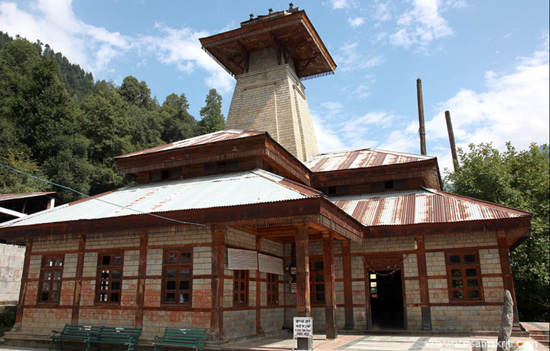 Manu temple in Manali, in the north Indian state of Himachal Pradesh. In my travels across India this is the only one I found.
“The greatest contribution to posterity made by Hindu tradition was the broadminded, sympathy and toleration of different view-points exhibited almost alone in India among the civilised communities of earlier days. Parsees got refuge in India. King of Travancore welcomed followers of the Eastern Church.” 3 Pg. 507. Not to forget the Tibetans.
Why did Ambedkar burn the Manusmriti in 1927?
According to this 2023 article in Countercurrents.org there were five reasons, “1. I do not believe in birth based Chaturvarna. 2. I do not believe in caste discrimination. 3. I believe that casteism is a stain on Hindu religion and I will try to end it. 4. Assuming that there is no high or low, at least I will not accept any restriction in eating and drinking among Hindus. 5. I believe that Dalits have equal rights in temples, ponds, and other facilities.”
On
Untouchability CJI Chandrachud
wrote in December 2024 SC order, “In 1919, the Southborough Franchise Committee adopted the test of untouchability to define the depressed class. The Committee interpreted the phrase “depressed classes” as the 'untouchability class, that is, the class whose touch or approach is deemed to cause pollution as it exists in the United Provinces. (Uttar Pradesh).” Pg. 90 of SC order Source
“The 1919 Note states that untouchability as it existed in Madras, where an untouchable’s touch necessitated immediate purification, did not exist in Assam.” Pg. 92/94 Source
So untouchability as it existed in Maharashtra did not
exist in the same way across India.
On
the burning of Manusmriti at Mahad Conference in 1927 Dhananjay Keer wrote in his book on Ambedkar, “The Manusmriti was condemned. The book governs the law and life of Hindus. Although compiled over 1,500 years ago, and times have changed, it is considered by the orthodox be good, all-pervading and omniscient even to this day.” 4 Pg.
100
Did Hindus follow only Manusmriti of the many Smritis? Was it
followed the same way across India?
If untouchability was practiced in all aspects of society WOULD–
1. “Ambedkar’s Brahmin school teacher drop daily a part of his meal-boiled rice, bread and vegetables into the hands of Bhim during the recess.” 4 Pg. 14
2. “The original surname of Bhim’s father was Sakpal. Bhim drew his surname Ambawadekar from his native village Ambavade. The teacher took so much fancy to the boy that he even changed his surname from Ambavadekar to his own surname Ambedkar in the school records.” Yet, “the teachers would not touch their notebooks.” 4
Pg. 14
3. Babasaheb’s Columbia University Education was funded by Maharaja of Baroda in 1913. 4
4. A Brahmin Doctor became Dr Ambedkar’s second wife in 1948?
Note that Ambedkar’s was a Socio-Political Movement. Babasaheb realized that his followers would be worse off if they became Sikhs, Jainism was out of question since being vegetarian was a pre-requisite. He realized the need for followers to be follow an Indic Faith so what was left was Buddhism. Read Are
Ambedkarites Buddhist
Those who complain of the status of Indian
Women should read Unsung Women Warriors of India, covers Indian women across centuries and
Life of Tarabai, the Maratha Queen who brought Aurangzeb brief.
Why had Caste system degenerated and is there an alternate view?
Author
and freedom fighter K M Munshi wrote in Foreword to Volume 5 of History and
Culture of Indian People, “In the 10th century, the castes were comparatively fluid. But then the fundamental values of Dharmasastras were changed to provide defensive ramparts in order to present a solid front to an aggressive alien culture and religion.” Pg. xxii
Post foreign invasions the caste system became rigid.
Spirituality
broke caste distinctions
Author,
ex-British Council Scholar and Spiritualist Dr Satish Kapoor wrote in Hinduism:
The Faith Eternal that spirituality is not confined to higher castes
or classes or gender. Veda Vyasa was born to a fisherwoman, Tiruvalluvar,
the Tamil poet-saint, to a weaver. etc. Pg. 71 Many
saints of medieval Maharashtra came from the lower strata of society. Goraba
(1236-1317) was a potter, Namdeva (1270-1350) a tailor, Tukaram (1650) a sudra
peasant.
Why
did the British find fault with Caste?
Noted
Gandhian and
author Dharampalji wrote in Rediscovering
India, “For the British, as perhaps for some others before them, caste has been a great obstacle, in fact, an unmitigated evil not because the British believed in casteless-ness or subscribed to a non-hierarchical system but because it stood in the way of their breaking Indian society, hindered the process of atomisation, and made the task of conquest and governance more difficult.” Read Caste made
into evil
Conclusion
Shruti
is eternal while Smritis change with time. There were many Smritis not only
Manusmriti. Untouchability as practiced in say Maharashtra was not followed the
same way across India. Caste became rigid post foreign invasions, a wall to
protect society.
Spiritual
leaders belonged to all castes including so called lower ones. The British used
caste to divide society the after effects of which are felt even today for e.g.
the Punjab Land
Alienation Act 1900,
made Khatris a non-agricultural tribe meaning only Jaats could own land in
Punjab.
Reform
yes but see through the British game of divide and rule that exists to this
day. As always, happy to stand corrected. Love.
References / Also
read
1.
What is the
meaning of Shruti and Smriti in Sanatana Dharma
2.
AWAKENING THE
NATION-Rediscovering the spirit of India with Swami Vivekananda
3.
Cultural Heritage of India Volume 2 published by the Ramakrishna Mission
Insitute of Culture.
4.
Life and Mission Dr Ambedkar by
Dhananjay Keer.
5. Can India become a Casteless Society?
6. Are Ambedkarites Buddhist