- Compilation starts with introduction. FAQ
includes what is Attar, how did Perfume making evolve prior to Mughals,
Challenges for Perfume Makers. Should we consume perfumes made from petroleum? Can
India find a desi word for Attar i.e. Arabic in origin. Conducted tours to
Kannuaj!
In 2007, I visited Grasse in France. It was only in 2026 that I heard of India’s Perfume Capital Kannauj. The town is about 125 kms from Lucknow and 220 kms from Agra.
Kannauj and Grasse. “Grasse has been the center of the perfumery industry in
France ever since the 17th century and is now considered the birthplace of modern perfumery, where natural extracts are blended with a myriad of synthetic odoriferous chemical compounds. But in Grasse, the traditional techniques for extracting floral oils, such as enfleurage have been abandoned.” Source
“Kannauj has been concocting attar (also known as ittr) for over 400 years—more than two centuries before Grasse, in France, emerged as
a perfume juggernaut. Known locally in Hindi as degh-bhapka, the artisanal method uses copper stills fuelled by wood and cow dung.” “Pranjal
Kapoor, the fifth-generation partner at M.L. Ramnarain Perfumers, Once the final product is produced, the rose attar
is aged for several months in a camel-skin bottle, which wicks moisture. Kannauj also produces
an extraordinary amount of rose water for paan.” National
Geographic
Through an online advertisement I got to know of Raahi Parfums who shared the first part of this compilation, the second part has extracts from already published articles. Matter presented as FAQ. Wish more travel companies promoted tours to India’s Perfume Capital.
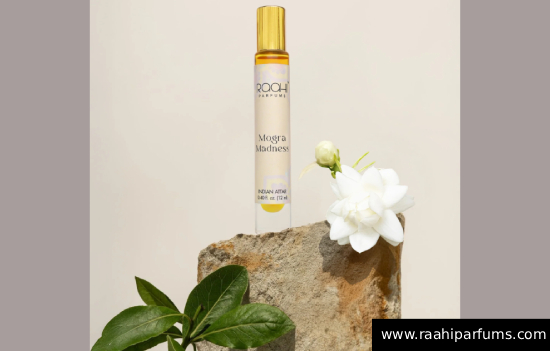
1. Introduction on
Kannauj Perfumes by Raahi Parfums: Reimagining India’s Forgotten Fragrance Legacy
“In a world increasingly driven by fast consumption and synthetic sameness, a quiet movement is emerging from the ancient perfume city of Kannauj-a movement that seeks not merely to sell fragrance, but to restore memory, culture, and identity through scent.
At the center of this revival is Raahi
Parfums, a modern Indian perfume house founded by brothers Shubham Gupta and
Divy Gupta. Rooted in a family perfumery legacy dating back to 1818, Raahi
Parfums represents a new generation of Indian fragrance makers who are
reinterpreting traditional attars for contemporary audiences without losing
their soul.
For centuries, Kannauj was known as the “Perfume Capital of India.” Its narrow lanes carry the aroma of roses, vetiver, sandalwood, mitti, jasmine, and countless other botanicals distilled through traditional deg-bhapka techniques - methods that have survived Mughal courts, colonial trade routes, and industrial revolutions. Yet despite this extraordinary heritage, Indian perfumery has often remained overshadowed by Western fragrance narratives. Raahi Parfums aims to
change that.
Rather than positioning Indian attars as
relics of the past, the brand presents them as living cultural expressions.
Their fragrances speak the language of modern India while remaining deeply
connected to the land, rituals, seasons, and emotions that shaped traditional
attar making.
From the earthiness of Mitti Attar that evokes the first rain on dry soil, to the calming depth of Khus Attar, to the intoxicating floral richness of Mogra and Gulab, Raahi’s creations are experiences of memory and belonging.
What makes the brand distinctive is that it
embraces Indian olfactory identity unapologetically. In an era where global
luxury is increasingly searching for authenticity, Raahi Parfums believes India
possesses one of the richest fragrance traditions in the world - one that
deserves global recognition on its own terms.
The brand’s storytelling reflects this philosophy. Their campaigns often connect fragrance with poetry, nostalgia, cinema, travel, and emotion rather than conventional advertising language. The result is a fragrance house that feels culturally rooted yet globally relevant.
Raahi Parfums reclaims of India’s sensory heritage by a younger generation that understands both tradition and modernity.
The resurgence of interest in artisanal Indian
attars is also contributing to the preservation of traditional distillation
knowledge in Kannauj, supporting local artisans and sustaining practices that
have existed for centuries.
As international fragrance conversations
increasingly move toward natural perfumery, heritage craftsmanship, and
storytelling-led luxury, brands like Raahi Parfums are placing India back onto the global fragrance map. Because some fragrances are not manufactured but inherited.”
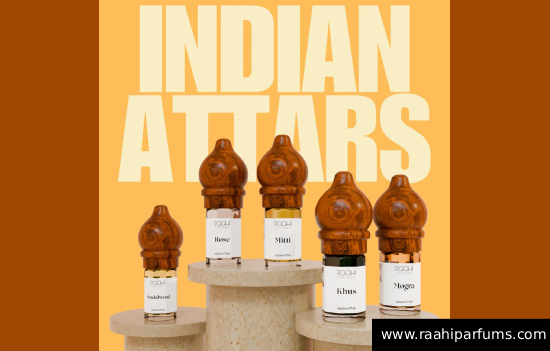
2. What is ATTAR?
According to this site, “The word “attar,” “itra” or “ittar” is believed to come from the Persian word “itir,” meaning perfume. That word itself came from the Arabic word “itr,” also meaning fragrance. Persian experts introduced the method of making attar by steam distillation.” Mughals made it popular. Link gives different types of attar and difference between attar
and perfume. Simply put attar made from natural oils and perfume from alcohol,
water and fragrance oils.
According to another site, “Attar, also known as “Itra” or “Ittar” is fragrance essential oil, typically made from rose petals. The word ‘attar’ is an Arabic word which means scent. Manufacturing of Attar fragrance oils is the practice of extracting scent from flowers, herbs and other botanical sources. Some attar oils are extracted from wood species as well.” It lists names of traditional equipment used for attar making. Another good read What is Attar
A search states that, “Before the Mughal invasion, ancient Indians broadly referred to all perfumes and aromatic substances as Gandhadravya
(aromatic materials) or simply Sugandha (a pleasant fragrance).”
3. Did Perfumes exist in India prior to
the Mughal invasion?
Yes. According to a paper by Pamela Das and Nibha B in
www.ijcrt.org, India had a vast history of perfume and aromatic scents. “Its evidences have also been found in various Indian literatures such as Brihat Samhita, various kind of formulas are written by Varahamihira, which is also considered as one of the oldest text of India. Many of the scented materials were mentioned in ancient Ayurvedic texts. In Charaka Samhita, Susruta Samhita, Ashtanga Hridaya, Ashtanga Sangraha etc. Many scented materials and perfumes were used for improving complexion and as a deodorant. Kautilya’s Arthashastra have the descriptions of many fragrant drugs, which were used in cosmetics like Sandalwood, Agaru (Aquilaria agallocha Roxb.) and Taila Parnika (Eucalyptus).” 1
4. How did Perfume making evolve
over periods prior to Mughal invasion?
According to this article in www. fernwehcollective.com, “The story begins in the Indus Valley
Civilization, where archaeologists have unearthed a terracotta
distillation apparatus used for extracting and storing aromatic materials. These early experiments with fragrance were used as an offering to the gods.”
“During the Gupta Period (4th to 6th centuries), Kannauj emerged as a significant centre for perfumery. The city's expertise in creating fragrances caught the attention of Chinese traveller Huan
Tsang, who documented its thriving perfume industry. Such was the city's aromatic influence that King Harshavardhan renamed it Kusumpura—the city of flowers—cementing its identity as a perfume-making hub.”
“What distinguishes Kannauj is its preservation of ancient techniques, particularly the hydro-distillation method introduced by Persian physician Avicenna. Using copper cauldrons (degh) and cooling chambers (bhapka) connected by bamboo pipes, artisans create pure, natural fragrances using traditional fuels like cow dung and wood.”
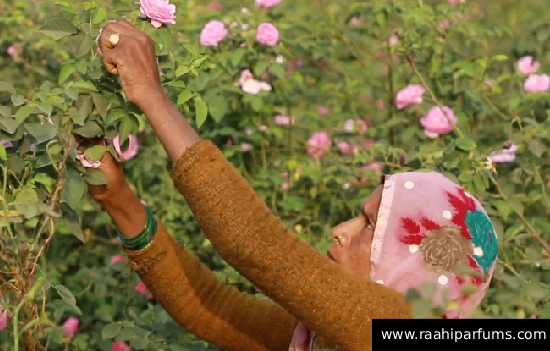
5. Challenge for Kannuaj Perfume
Makers
There are many. One reduction in the availability of Sandalwood oil (supply has “dwindled due to government restrictions on logging, and the growing popularity of synthetic base (liquid paraffin is derived from petroleum)”, Two, a decline in the production of JATMANS i.e. found in the
Himalayas at a height of 3.5000 metres. Three, competition with
alcohol/chemical based deodorants and perfumes that are cheaper.
Divy Gupta co-founder of Raahi Parfums says, “Climate change, irregular rainfall, rising temperatures, and water scarcity have made flower cultivation increasingly difficult for farmers who grow roses, jasmine, and marigold. Many traditional farmers struggle with low profits, shrinking agricultural land, and migration of younger generations toward bigger cities in search of stable income. Urbanisation and industrial pressures are also reducing availability of fertile land.”
I
called Mr Ashok Kapur of M.L. Ramnarain Perfumers, a couple of times, for insights
on challenges but no response.
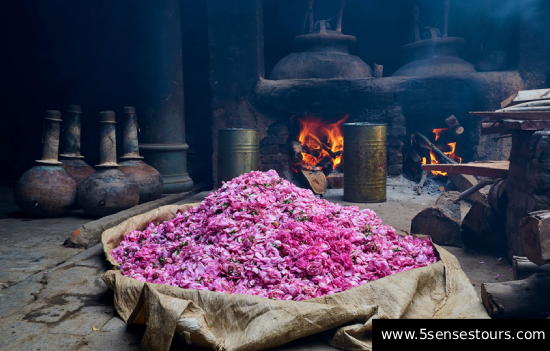
6. Kannauj’s traditional perfumery is a culturally and environmentally conscious!
Divy Gupta co-founder of Raahi Parfums , “Yes - Kannauj fragrances can often be described as more environmentally friendly compared to many modern synthetic perfume processes, especially when they are traditionally crafted. Kannauj’s attars are usually made using natural flowers, herbs, woods, and botanical ingredients that are distilled through the centuries-old deg-bhapka method, a slow hydro-distillation technique that relies on copper vessels and minimal industrial processing.”
7. Is there a conducted tour
from Agra to Kannauj?
Yes. Drive from Agra to Kannauj is app 3.5 hours. “Step into a family-run perfumery where copper degs (stills) gently simmer petals, spices, and herbs. Watch the hydro-distillation process up close-from fresh rose petals being loaded into stills to the slow extraction of attar. Learn about unique fragrances like mitti attar (essence of baked earth after rain), rose, kewra, vetiver, and hina.” For more read Kannauj
Perfume Tour from Agra
8. Tell a bit about history of Kannauj
and King Harshavardhan
Founder of Bharatiya Vidya Bhavan Kulapati K M Munshi wrote that, “Under the Pratihaas, Kanauj reached the zenith of power, (815-940). Its rulers were called Gujaresvaras; in a later inscription, Gurjara-Pratiharas.” Kanauj or Kanyakubja continued to be the most influential centre of culture till 1018 A.D. when it was dethroned by Mahmud of Ghazni. The
History and Culture of Indian People Volume 4.
Harsha’s empire did not comprise any substantial territory outside modern day Bihar, U.P., Odisha and Bengal. Pg. 112 He was a patron of the Nalanda University. Period ruled is app 601 to 646 A.D.
Liquid paraffin is derived
from petroleum. A search states it is a by-product during the process of
refining crude oil.
If the Government of India is serious about
reducing crude imports, it should support use of non-crude based (naturally
made) perfumes.
Consume Eco-friendly Perfumes.
For a very good write-up on how the perfume is made
Also read
1. Indian History of Perfume
2. Good
write up in Satyaagraha.com on Kannauj Perfumes
3. National Geographic How did Kannauj become the Perfume Capital of India
4. DC says Kannauj Perfumes has lots of growth potential