- Interesting story of how the author got to know of Kannathal Temple and how temple got its name? Details of devotees whose eye ailments were cured. What is the role of Nattukottai Chettiars in temple upkeep? Know about celebrated poet Kambar’s association with the temple.
The ageless temples of Tamil Nadu are
steeped in rich antiquity. In addition to their architectural
splendor and strict adherence to tradition, several of these sacred spaces are
celebrated for their divine power to grant boons to devotees.
One such ancient shrine is the temple of Kannathal, also known as Netrambikai; goddess of 1000
eyes.
Fifty kms from the famous temple town of Madurai is
Natarasankottai. The absence of overbearing commercial activity, vehicles,
hoardings and posters add to the tranquil environs of this small hamlet. Tucked
away in such pristine surroundings and serene quietness is Kannathal Temple,
dedicated to the goddess of vision, a form of Durga with eight arms.
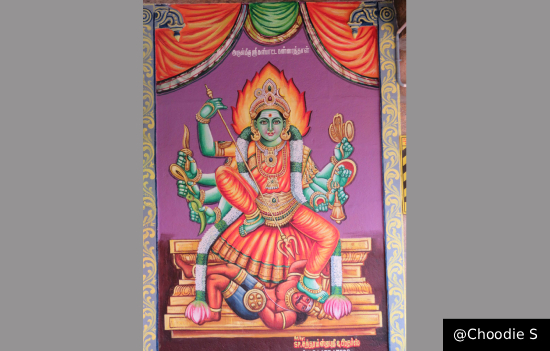 Painting of Deity as she is in the sanctum.
How I got to know about Kannathal Temple
My search for this temple began with a mysterious
phone call from an unknown lady seeking information about a temple dedicated to
the goddess of vision. I had no clue since had never heard about the temple.
Her calls continued at various intervals; my enquiries drew a blank. The temple
that many are familiar with in Karnataka, known for its divine
healing powers, particularly for vision-related ailments is the Nanjangud Srikanteshwara temple. But, the lady’s query was about a temple dedicated to a goddess of vision.
During one of my visits to Kailas Ashram
in Bengaluru, which is home to the imposing Sri Rajarajeshwari Temple, in the
room where the pontiff blesses devotees, an ashram resident showed me a
photograph of a sixteen-armed manifestation of Durga. She is Kannathal, goddess of vision he said. Strangely, the calls from the lady stopped; I don’t know who she is nor had I saved her number.
I had to visit the temple; I felt a deep
urge to share the story of this sacred shrine and its goddess. Conversing with
those connected to the temple unveiled a realm rich in mysticism and divine
energy. Every person in this village is
named after the deity or has a name that begins with the same syllable.
“The deity is so powerful, her healing powers astounding, especially relating to the eyes. She answers the prayers of devotees, bestowing grace upon those who seek from her, irrespective of where they pray from,” says Nethranandam, an elderly priest.
Saraswathi, a retired bank officer, recalls numerous instances of her prayers to Kannathal being answered. “Every time I visited the temple I returned feeling immensely contented. I have prayed to this goddess every time someone in the family had any issue with the eyes and the eye problem got resolved. I once prayed for a Christian colleague who
had suffered a serious retinal issue. He recovered completely,” informs Saraswathi. She was good enough to provide me extensive
research support and translated critical reference materials from Tamil.
“My great-grandmother attempted suicide at
the village pond, driven to despair after her husband abandoned her without a
trace. Just as she was about to take the leap, a
mysterious voice intervened and promised that her husband would return in
ninety days. If he didn’t, she could go ahead with her plan to commit suicide. True to the
prophecy, her husband returned on the ninetieth day, ushering in a lifetime of
prosperity. Ever since, our entire family is spiritually bound to this temple. We owe our existence to Kannathal,” said Kannappan, an elderly devotee of Kailas Ashram in Bangalore.
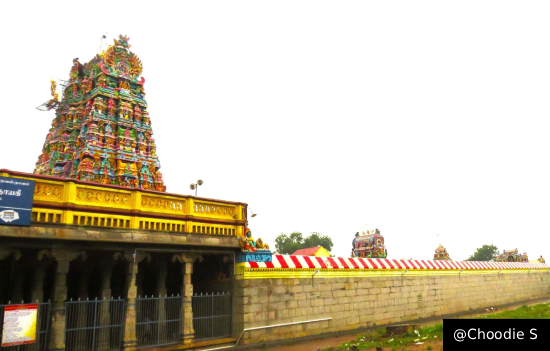
Legend of the Temple
Numerous legends surround the temple's origins. Kannathal is believed to be an
avatar of Kannagi (of the Sangam period between
the 3rd century BCE and 3rd century CE), the central figure in the Tamil epic
Silappatikaram. Kannagi is said to have come to
Natarasankottai from Madurai and taken the form of Kannathal. It is said that
the Pandian rulers built an impressive temple for the Goddess.
Local lore traces the temple back four
centuries. Narrating the centuries old legend, Nethranandan, told me, “A peasant woman once tripped and
spilled her entire pot of milk. When this mysterious accident became a daily
occurrence at the exact same spot, she and the village elders reported the
recurring losses to the king”.
The goddess appeared in the King’s dream, revealing that she was buried there and instructing him to excavate her murty. The king ordered accordingly. As the axe bit into the earth, it struck a hard stone, and blood began to seep from the soil. At that exact moment, the excavator's eye began to bleed. As the villagers carefully dug deeper, they unearthed a life-size, eight-armed pratima of the Goddess. They realized that the axe had tragically struck her eye. As soon as the murty was brought out the excavator’s eye stopped bleeding.
The pratima was placed facing South at an ancient
Shiva temple in the village. The following
morning, when
the temple doors were opened villagers were astonished to see the deity had
repositioned herself to face the North. “The deity manifested on a person and expressed that she should be installed at the Northern side of the town”, says Nethranandan. The murty was installed, at the place where the temple stands today.
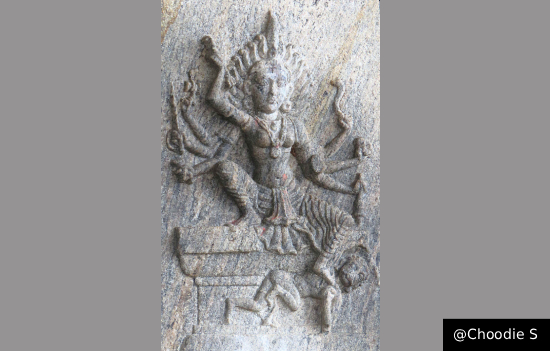 Carving of the deity.
How KANNATHAL Temple got its name
Shortly after the murty’s installation, a devotee who had lost his sight came to the temple, after praying for healing at countless other shrines without success.
Following the priest’s advice to wash his face with the consecrated abhishekam water, he instantly regained his sight. Overcome with divine ecstasy, the devotee began to call out, 'Kannatha, Kannatha (kan means eyes in Tamil, aatha means mother). “Ever since, the deity came to be known as Kannatha and the temple is known as Kannathal temple. The Goddess is also known as Netrambika and Netravati. Every first born child in Natarasankottai is named after the goddess; Kannappan, Kannathal, Netravati, Kannudaiamman or the name starting with the word ka,” informs Subramanya Dikshitar, chief priest of the temple whose original name is Kannan.
On the king's command, customary protocols were observed to honor the deity, widely revered as a potent manifestation of Goddess Durga.
Examples of devotees whose
eye ailments were cured
My visit to the temple coincided with the afternoon ‘abhishekam’; I noticed a couple from Bangalore among the devotees. As soon as the rituals concluded, the woman reverently applied the consecrated water to her eyes. I learned that she had been completely cured of an eye ailment after praying to the goddess, and the couple has been visiting regularly ever since.
Abhisheka is performed to the deity five times every day. “The deity is so powerful that it is essential to keep her appeased by this worship”, says Subramanya Dikshitar. Important festivals and rituals are observed in accordance with the agamas. During
the annual ten-day Brahmotsavam, the pratima is ceremoniously carried in a
vibrant daily procession on various vahanas (sacred mounts).
Standing as a testament to time, the
temple features majestic pillars adorned with intricate carvings of deities,
including Kannathal. They beautifully narrate our heritage. A massive temple tank adds to the beauty of this ancient structure. The
circumambulation path outside the sanctum sanctorum is lined with large,
vibrant paintings depicting the story of Kannathal.
What is the role of Nattukottai
Chettiars in upkeep of Kannathal temple?
Nattukottai Chettiars (Nagarathars) are a community who
are foremost in their service to the ancient temples of Tamil Nadu. Most of
them belong to villages around Madurai, Ramnad and Pudukottai. Banking is their
hereditary profession and financial acumen well recognised.
Nattukottai Chettiars are staunch guardians of Sanatana Dharma and they fastidiously carry forth the traditions laid down
by their ancestors, whether it is in offering huge donations, renovating
temples, reviving rituals or performing the most important Kumbhabhishekam. The
community unitedly pitches in. It is their way of thanking God for the
affluence bestowed upon them. Nattukottai Chettiars lead a simple
unostentatious life and never put their names on any contributions made to
temples. Every member of the Chettiar community is connected to a temple.
Natarasankottai is the ancestral home of
the prosperous Nattukottai Chettiars, whose magnificent mansions evoke the
elegance of a bygone era. Long before the rise of the Pandian dynasty, the
broader landscape, including the present-day Sivaganga region comprised of small,
independent territories. Following a tsunami centuries ago, the chettiars came
to settle in Natarasankottai.
“The Nattukottai Chettiars are steadfast devotees of Kannathal, they are the driving force behind the temple's major contributions. They generously fund the celebrations, and have enabled the goddess a silver and gold chariot,” says Ramanathan, a resident of
Natarasankottai.
Kambar Samadhi
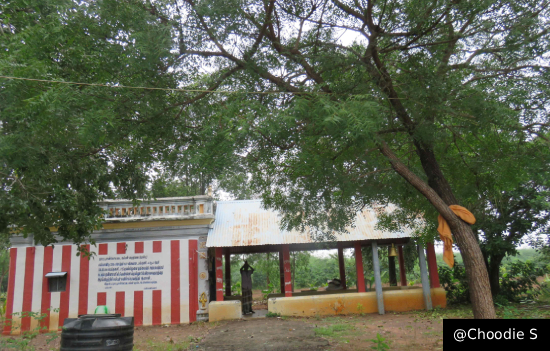
Tamil Nadu’s most celebrated poet Kambar, author of Kambar Ramayana is said to have breathed his last here at Natarasankottai and a temple was built at his Samadhi. It is said Kambar would spend time at Kannathal and the adjoining Shiva temple.
To this day, it is a practice to offer prayers at Kannathal temple first whenever festivities or rituals are performed at Kambar’s temple in Karaikudi, twenty-six miles from Natarasankottai. The Karaikudi temple venerates Kamban’s Ramayana and the Tamil language.
Temple Management
Kannathal temple is owned by the erstwhile royal
family of Sivagangai. It is governed by
the Shivaganga Samsthanam Devasthanam Trust consisting of representatives of
the Nagarathar community and prominent locals. The heiress of the royal family
Maduranthahi Nachiar heads the Trust.
This divine town also houses ancient temples of Shiva, Rama, Karpana Swamy and Perumal. “Because of Kannathal’s presence the entire town is considered a temple,” says Subramanya Dikshitar.
To read all articles by author
To see albums of Tamil Nadu Temples
Also see albums
1. Karikudi
Bangala Hotel
2. Karikudi Palaces – Chettiar Homes
3. Meenakshi
Madurai Temple
4. Visalam
Hotel Karikudi
5. To see Video of temple 8
minutes
6. To
read 2015 blog on temple