- A beauty. A wish-fulfilling place. Serenity amidst sacred hills and forests.
Wildlife, cool winds, chants, tears, and faith blend into a spiritual experience. Read about author’s divine experiences during Tirupati Yatra.
People often describe Tirumala
Venkateswara Temple through statistics. One of the most crowded pilgrimage
centres. A place visited daily by lakhs of devotees. Yet none of these
descriptions truly explain Tirumala. People do not travel there simply because
it is famous. They go because something within them feels drawn toward the Lord
of the Seven Hills.
Only when one experiences it personally does one truly
understand. Somewhere deep within, devotees feel
chosen. Chosen by the Lord Himself.
There is a belief among devotees that
no one can visit Tirumala unless Lord Venkateswara Himself wills it. One may
plan endlessly, postpone journeys, or face obstacles repeatedly, but when the
Lord finally calls, the path opens effortlessly. After this visit, I understood
why devotees say, “He sees you only when He wants to see you.”
I had visited Tirumala many times
during my younger years. Those memories remained sacred, but this visit came
after a long gap, a gap that slowly transformed into a longing. Over time, the
desire to see Him again no longer felt like an ordinary wish. It became a kind
of thavam (penance), a quiet dhyanam(meditation) within the heart. And when the
opportunity finally arrived, it felt more like a blessing granted by the Lord
Himself.
In my family, a journey to Tirumala
never begins directly with Tirupati itself. There is always a quiet tradition
observed before setting out toward the seven hills.
We first pray to our Ishta Deivam or
Kula Deivam, seeking blessings for a safe and fulfilling pilgrimage. Along with
those prayers, a small sum of money is kept aside before beginning the journey.
It remained untouched throughout the trip, carried with devotion, and only
after returning safely from Tirumala would it be offered into the hundi of the
Lord we prayed to. It is a simple family custom, yet one that beautifully
reflects the feeling that the entire pilgrimage, the journey, the darshan, and
the safe return home happen only through His grace.
The experience begins even before the
hills appear.
Near the foothills, devotees
traditionally visit the Sri Padmavathi Ammavari Temple, where Alamelu Manga
Thayar, the divine consort of Lord Venkateswara, resides in grace and
compassion. Beautifully seated within the sanctum, she radiates a motherly
warmth that instantly calms the mind. There is a softness in her sannithanam
that makes devotees feel welcomed before ascending the sacred hills to meet
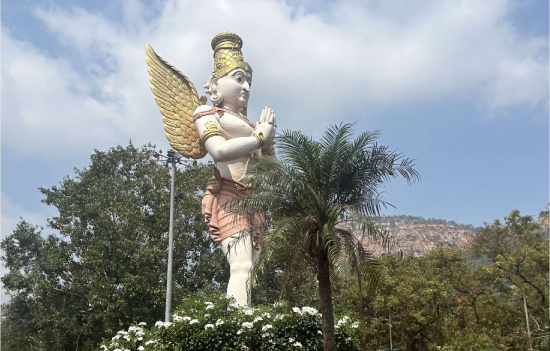
Srinivasa Perumal Himself. You can see the beautiful Garudan at Alipiri gate
gigantic and welcoming.
The journey toward Tirumala slowly
transforms the atmosphere around you. Dense greenery, cool mountain air,
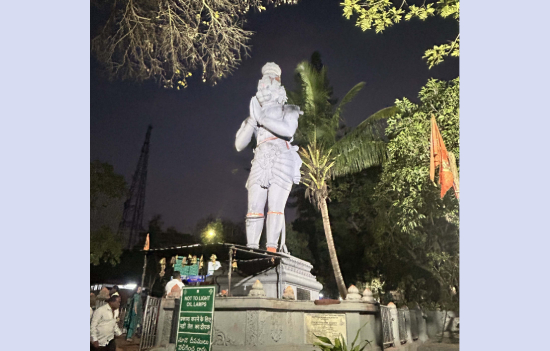
monkeys lining the roads, the scent of camphor and flowers, and chants of “Govinda” rising from different corners create a feeling unlike any other pilgrimage center. You take blessings of Lord Ganesha on the way, not to forget Hanuman who also acts as a guardian for people who take the journey through steps.
The seven sacred hills
of Tirumala are said to represent the seven hoods
of Adisesha himself: Seshadri, Neeladri, Garudadri, Anjanadri, Vrushabadri,
Narayanadri, and Venkatadri, the final hill upon which the Lord resides.
Many devotees and elders often say that the sacred hills themselves are Perumal reclining. When viewed from certain points, one can almost visualize the outline of the Lord’s face resting across the hills. It is also said that in earlier centuries, many Acharyas and saints considered the hills themselves so sacred that they would avoid eating while climbing or descending, treating entire hill as the divine body of Perumal.
Even the name Neeladri carries a story deeply connected to devotion. According to
temple tradition, Princess Neela Devi offered a part of her hair to restore a
small portion of the Lord’s
scalp after an injury, leading to the sacred custom of tonsure in Tirumala. Even today, thousands offer their hair at the
temple not as loss but as surrender, an offering of ego, pride, vanity, and
gratitude at His feet.
Devotees often speak with wonder about
the Lord’s
hair itself. Temple priests describe His hair as soft, silky, and never
tangled, something many believers see as another sign that He is truly alive
within the sanctum and not merely a stone pratima.
At Alipiri, the grand entrance to the
hills, devotion becomes visible in its purest form. You see hundreds of
vehicles waiting at the toll gate. On the other side, thousands climb the
sacred pathway every day, around 3,250 steps i.e. app twelve kilometers. Some
walk barefoot. Some carry children. Some climb silently through tears. Some
stop to bend and touch every single step before proceeding further. Watching
the endless stream of devotees climbing with prayers in their hearts sent a chill
through my body. Faith in Tirumala moves, climbs, cries, chants, and
surrenders.
Before entering the main temple,
tradition says devotees must first seek blessings from Sri Varahaswami Temple, the shrine of Lord Varaha Swamy,
regarded as the original owner and guardian of the sacred hills. Temple tradition
say Lord Venkateswara sought His permission before residing upon Tirumala, and
devotees continue to honor that divine order even today.
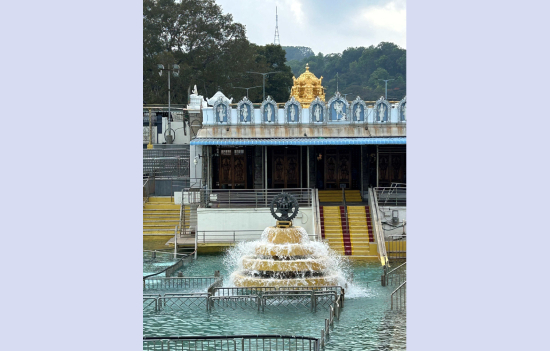
Beside the temple lies the sacred Swami Pushkarini, where devotees often take a small
holy dip before darshan. The waters are believed to purify the body and mind.
Tirumala also carries one of the most
beautiful traditions of service. Tirumala Tirupati Devasthanams administers and
supports more than a hundred temples, preserves ancient rituals and Vedic
traditions, conducts educational and charitable services, supports hospitals
and institutions, and feeds lakhs of devotees daily through Annadanam. In a time when many temples struggle
for preservation, there is something deeply reassuring about seeing devotion
protected and sustained on such a massive scale.
Not to forget the Tirupati laddu, perhaps one of the most recognized
prasadhams in India today. Yet many devotees remember that years ago, the
famous Tirupati Vadai held a special place among the temple offerings and was
deeply cherished long before the laddu became globally iconic.
One beautiful aspect of Tirumala that
remains unforgettable is how devotees make space for one another to apply the
sacred Thirunamam. Complete strangers move aside patiently while another
devotee draws the naamam upon their forehead. In that simple act, one feels an
inner belief slowly forming, a feeling that everyone there belongs equally to
Him.
Next is wait for darshan.
There are many queues. Sarva Darshan,
special entry, VIP, and break darshan. Yet every path ultimately moves toward
the same destination. Him.
Walking slowly through the lines to
see Him becomes an experience in itself. You literally cross six doors as the
Lord ascends in the seventh. The queues, the Dwaja Sthambam, the slow wait,
push of the people to see Him.
The atmosphere changes gradually as
one moves deeper into the temple corridors. At first, the chants are soft. “Govinda… Govinda…” Step by step, they become louder, deeper, and more powerful.
One first notices the majestic Garuda,
standing with fierce devotion and unwavering bhakti in his eyes. Soon after
appear the towering guardians Jaya and Vijaya near the sanctum, silently
intensifying the anticipation of seeing the Lord.
The sevakas continuously guide the
moving crowd: “Jaragandi… Jaragandi…” (move ahead in Telugu). Move ahead.
And somewhere amidst the chants of “Om
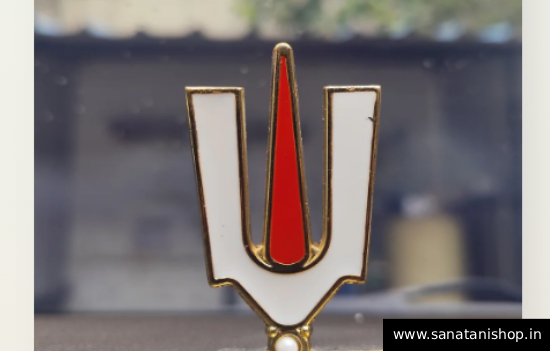
Namo Venkatesaya,” one suddenly notices the massive Thirunamam and the golden glow of the sanctum ahead.
Then comes the final moment. The
seventh doorway.
And within it, Him.
Venkatesa.
Balaji.
Srinivasa.
Perumal.
Edu Kondalavada
Venkataramana.
Standing there in divine silence. Tall. Radiant. Compassionate. Nearly
eight feet of overwhelming divinity.
At that moment, He no longer feels
like a murty made of stone. That thought disappears instantly upon seeing Him.
There is an overwhelming sense that He is alive, truly present within the
sanctum, watching every devotee who stands before Him.
Temple tradition believes that the
deity is swayambhu, self-manifested, not sculpted by human hands. Devotees
believe He chose to remain upon the seven hills through Kali Yuga to bless
humanity, standing eternally as Govinda for every soul that seeks Him.
His warm presence within the cool aura
filled Sannithanam is something impossible to describe fully. And perhaps that
is why tears arrive so naturally.
Not out of sadness. Not even entirely out of happiness.
But from something deeper that words struggle to explain.
The mind becomes peaceful even amidst
the rushing crowd. The heart feels lighter. And although the darshan may last
barely a few seconds, those few seconds become the most unforgettable moments
of one’s
life.
Devotees often refer to Him as Kali
Yuga Krishna, Govinda Himself standing upon the seven hills for this age. The
Krishna connection within Tirumala tradition is impossible to miss. Vakula
Matha, believed to be Yashoda reborn, is said to have been granted the blessing
of witnessing the wedding of Lord Srinivasa, something she could not experience
during Krishna’s
earthly life.
Devotees often describe Tirumala
darshan as “Athirupthi.” A longing that never completely satisfies.
No matter how many seconds one stands
before Him, the heart immediately wants one more glimpse. One more second. One
more darshan.
People wait for hours, sometimes an
entire day, just to see Him for a few seconds. Yet when they finally do, those
few seconds feel too precious to leave behind.
And perhaps the most mysterious part
of Tirumala darshan is this: many devotees say they slowly forget. His exact
form after leaving the sanctum. The eyes remember the tears. The heart
remembers the feeling. But the mind struggles to fully hold His image until the
next visit calls them back again.
Perhaps that itself is His blessing. A
divine way of ensuring that devotees return to Him again and again.
Because Tirumala is not merely a
temple that people visit. It is a place where devotion becomes experience,
where faith becomes emotion, and where the Lord, standing silently upon the
seven sacred hills, continues to call millions toward Him generation after
generation.
To read all articles by author
Also read
1. Spiritual Experience of climbing Tirumala Hills